
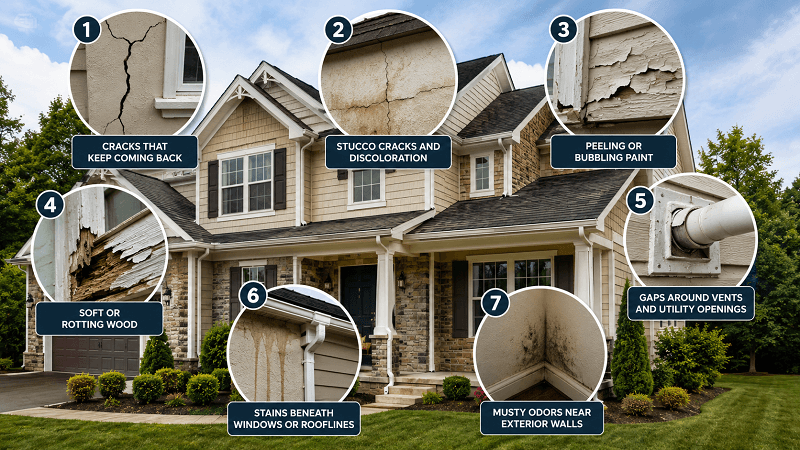
Our exterior protects your home from rain, wind, heat and cold, bugs, and more. There are often very small early warning signs of serious problems that can develop slowly and cause great damage if ignored. That small crack or stain in your exterior can develop into a much larger problem and become very costly to fix.
There are instances in which you could allow a minor issue to continue to exist with the possibility that you could address the problem at a later time. There are, however, instances in which the issue would cause much greater damage in the future if you wait too long to fix the issue. This could be the case with cracks in your walls or exterior surfaces where water could leak into your walls, down into your attic, and into your insulation or cause the wood in your exterior surfaces to rot.
1. Cracks That Keep Coming Back
Tiny cracks in the building’s exterior arise from the normal growth of building materials. Sometimes, cracks that have been filled and painted repeatedly seem to return. This can arise from several sources: building movement; water getting into the building through the crack; or poor workmanship in the original construction or repair.
Look for cracks that occur in specific places of your home’s exterior, like in and around windows and doors, the corners of your home, and even where two different types of building materials meet (like siding and brick, for example). It is said that if you fill a crack in siding with caulk or filler and that same crack appears again within a matter of months, there is more to the problem than what is meeting the eye, and that additional cracking can indicate serious problems within your exterior walls that could require repairs that could cost a pretty penny to have completed.
2. Stucco Cracks and Discoloration
A number of hidden things can affect a stucco exterior—things such as how stucco was initially installed, stucco flashing, stucco seals, and stucco and roof drainage. Therefore, it’s extremely important for homeowners to be able to determine stucco failures and to understand stucco repair options prior to beginning a repair. In this article we will review a number of common issues seen on exterior stucco walls and will discuss whether or not they could potentially be a sign of moisture-related damage within a home’s exterior walls. We will then review remediation options for each situation that was presented in this article.
By reading up on stucco failures and remediation, you can determine the extent of damage and whether surface repairs will be enough or if you will need to have a full remodel to fix moisture issues that have affected the interior and exterior of your home.
3. Peeling or Bubbling Paint
This barrier should help protect the exterior of your home from the elements. So when the paint on the exterior of your home begins to peel or show signs of bubbling or blisters, it is likely that moisture has seeped beneath the surface of the paint and is beginning to cause damage to the exterior surface of your home.
This is even more important for the trim on your home as well as the siding joints and any porch columns. Dry paint will not stick to moist surfaces, so if you just paint over the issue, you will only be temporarily fixing the problem until the paint starts to fail again.
4. Soft or Rotting Wood
Wood trim found around the edges of windows and doors as well as along the roofline and exterior decks is particularly prone to water damage. If your trim becomes soft, begins to fall apart at the edges, develops dark spots, or begins to flake and peel, it most likely is suffering from rot.
To check if the wood is rotten or not, gently press the area with a screwdriver or some similar blunt tool. Healthy wood will feel hard, while rotten wood will feel soft and spongy. If the wood feels soft or spongy, further inspection will be required to determine the extent of the damage.
5. Gaps Around Vents and Utility Openings
Exterior walls of homes are often made up of walls that contain many openings for various exterior venting requirements, pipes, cables, faucets, electrical, and other equipment.
Little spaces can occur around exterior wall vents, conduit, pipes, faucets, and electrical components as the building settles. Though small, these cracks can provide an entry point for water, bugs, cold air, and weather dirt into the wall. Over time the caulk can deteriorate and come loose, allowing air to infiltrate in. Also, covers can sometimes become loose allowing weather to penetrate in. Be sure to periodically inspect exterior wall openings for cracks in caulk, loose or missing covering pieces, and gaps in openings.
6. Stains Beneath Windows or Rooflines
Dark streaks and water stains that penetrate through the exterior of a building can indicate a host of problems ranging from failed flashing to clogged and overflowing gutters, compromised exterior seals, and poor design for water drainage.
After heavy rain, go around your house and check the areas where water would collect and run down the exterior of your house. If you notice water running in a particular area of your house, check the stain for repeated occurrences in the same spot.
7. Musty Odors Near Exterior Walls
Indoor musty smells often indicate that there is moisture coming from outside of a home that is getting trapped between the exterior and interior surfaces of the exterior walls. If not identified early, musty smells can get worse until significant and expensive damage has occurred.
Some of the exterior signs of moisture problems that can be brought inside a home include musty smells or damp drywall, warped or peeling interior paint, and excessive humidity. If you notice any of these signs after a rainy period, it is a good idea to have your home inspected for any hidden moisture problems.
Monitoring the exterior of a home does not have to involve special tools or take a lot of time. Performing periodic inspections and looking for potential issues can head off future problems and save a lot of time and money in repairs down the road.