
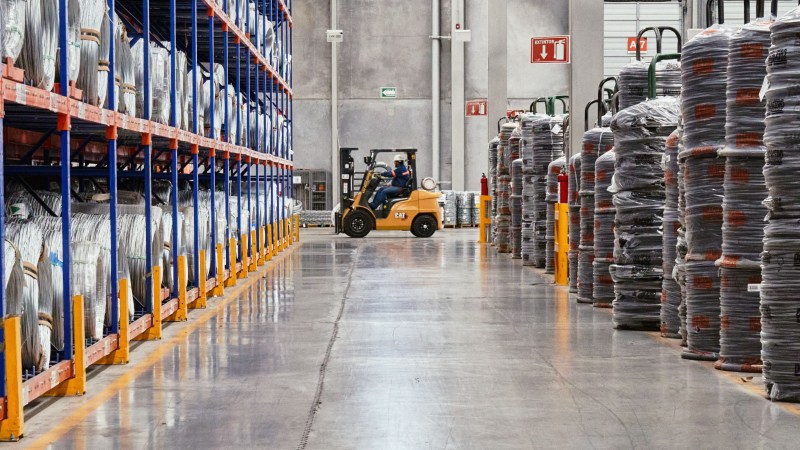
In a high-volume warehouse or manufacturing plant, time isn’t just money—it is reputation. When material handling systems stall, the entire supply chain suffers a costly ripple effect. Forklifts sit idle in congested aisles, assembly lines wait on parts, and shipping windows are missed.
The frustrating reality is that material handling delays are rarely caused by a single catastrophic event. Instead, they are the result of tiny, invisible inefficiencies: an extra fifty feet of travel path, a slightly misaligned conveyor sensor, or an outdated tracking log.
Over time, these micro-delays compound into massive operational bottlenecks that drain your bottom line. To help you restore fluid movement to your facility, let’s explore seven proven strategies to eliminate delays and maximize your operational flow.
1. Implement Data-Driven Warehouse Layout Optimization
How do you reduce material travel time in a warehouse? You can reduce travel delays through strategic warehouse layout optimization, which places fast-moving products closest to the shipping docks and groups frequently co-ordered items together.
If your floor operators spend half their shifts simply walking or driving empty forklifts across the facility, your layout is working against you. Many operations use a legacy layout designed years ago for a product mix that no longer exists.
To fix this, execute an ABC inventory analysis. Classify your inventory by velocity: “A” items represent your fastest-moving goods, “B” items move moderately, and “C” items are slow-moving or seasonal.
Re-map your facility to place all “A” items within the most accessible, low-travel zones near your packing and shipping areas. Move your “C” items to the back walls or higher rack levels. This single shift drastically slashes total daily travel distance, cutting down on aisle transit delays instantly.
2. Upgrade Conveyor Drivetrains and Mechanical Components
What mechanical upgrades prevent conveyor line stoppages? Upgrading to heavy-duty, high-efficiency gearboxes and drive assemblies prevents mechanical failures under fluctuating loads, keeping sorting systems running continuously.
A facility’s layout is only as good as the machinery moving the goods. Conveyor belts and sortation systems bear the brunt of continuous operational stress. If a motor burns out or a gear shears under a heavy load spike, the entire line grinds to an immediate halt.
To prevent these unexpected stoppages, review your mechanical drivetrain configurations. For high-capacity conveyor lines, bulk handling systems, and heavy sorting loops, utilizing rugged, high-efficiency parallel shaft gear boxes from trusted manufacturers maximizes uptime. These specialized gear systems are engineered to handle intense, continuous-duty cycles and high-torque demands without overheating, ensuring your automated lines maintain their target throughput capacity during peak fulfillment seasons.
3. Transition to a Proactive Predictive Maintenance Program
How does predictive maintenance reduce equipment downtime? Predictive maintenance uses real-time sensors to track machine vibration, temperature, and acoustic data, allowing maintenance teams to fix components before an actual breakdown occurs.
Relying on a reactive “if it isn’t broken, don’t fix it” mindset is incredibly expensive. Waiting for a critical component to fail means paying for emergency overnight shipping on parts, dealing with unplanned labor idleness, and scrambling to adjust fulfillment schedules.
Transitioning your facility to a structured predictive maintenance program removes the guesswork from machinery upkeep.
- Thermal Imaging: Scan electrical panels, motors, and bearing housings weekly to catch internal friction and overheating before smoking occurs.
- Vibration Analysis: Mount small, wireless sensors onto critical drive shafts to detect microscopic imbalances that indicate a bearing or gear is nearing the end of its operational lifespan.
By scheduling your repairs during planned off-hours, you protect your active production windows from unexpected mechanical friction.
4. Problem-Cause-Solution: Eliminating Common Floor Bottlenecks
To help isolate where your facility might be losing time, consider this quick problem-solving breakdown of standard material handling friction points:
| Observed Delay | Root Cause | Actionable Solution |
| Forklift Traffic Jams | Two-way traffic forced into narrow aisles; overlapping picking and replenishment zones. | Establish strict one-way traffic lanes and schedule heavy bulk replenishment during off-peak shifts. |
| Staging Area Overflow | Inbound pallets arriving faster than receiving teams can scan, sort, and log them into inventory. | Implement a dedicated cross-docking process to send pre-sorted inbound goods straight to outbound stages. |
| Conveyor Sorting Errors | Outdated or dirty optical sensors failing to read barcodes, sending packages to reject lanes. | Integrate automated pneumatic blow-offs to clear dust from lenses and institute a daily sensor calibration loop. |
5. Standardize Digital Tracking with Real-Time WMS Integration
If your team still relies on paper picking sheets, manual clipboards, or batch-updated spreadsheets, you are actively manufacturing delays. Manual data entry introduces human error, results in misplaced inventory, and forces workers to search aimlessly for “lost” pallets.
A modern Warehouse Management System (WMS) paired with mobile barcode or RFID scanners ensures that every single inventory movement is logged in real time. When a picker scans an item, the system instantly updates the entire database, optimizes the next pick path, and alerts replenishment drivers exactly which bay needs stock. Removing the paperwork eliminates the cognitive lag, allowing your floor team to execute tasks seamlessly.
6. Automate High-Repetition, Long-Distance Transit
How do mobile robots reduce material handling delays? Autonomous Mobile Robots (AMRs) handle long-distance, repetitive point-to-point material transit, freeing up human workers to focus on specialized picking and packing roles.
Human labor is incredibly valuable, which means using your personnel to push carts down a half-mile hallway is an inefficient use of resources. It tires out your workforce, increases the risk of workplace accidents, and slows down transit speeds.
Integrating Autonomous Mobile Robots (AMRs) or Automated Guided Vehicles (AGVs) allows you to automate repetitive material hand-offs. For example, once a picking bin is filled, an operator can place it on a local AMR. The robot safely navigates the facility floor independently to deliver the bin to the packing station, allowing the human picker to remain in their zone, actively processing the next order.
Myth vs. Fact: Material Handling Throughput
- Myth: Increasing forklift travel speeds is the fastest way to solve transport delays.
- Fact: Increasing speed limits on the floor dramatically spikes warehouse accident rates, leading to severe injury risks and costly operational shutdowns. True speed is achieved by reducing total travel distance through smart slotting, not by rushing.
- Myth: Total automation is the only way to achieve elite facility efficiency.
- Fact: While automation is powerful, an expensive robotic system deployed on top of a flawed, disorganized operational process will simply execute inefficient tasks faster. Process optimization must always precede technology integration.
7. Prioritize Employee Ergonomics and Standardized Training
The most overlooked component of any material handling framework is the human element. When work areas are poorly designed, operators face physical fatigue, leading to slower movement speeds, dropping items, and increased errors as their shifts progress.
Design every workstation with ergonomics at the forefront. Utilize adjustable-height packing tables, position heavy totes at waist height to eliminate bending, and deploy anti-fatigue mats at standing stations.
Pair these physical adjustments with standardized cross-training. When every team member knows how to operate multiple systems fluently, you can seamlessly shift labor to reinforce a specific zone the moment an unexpected inbound volume spike threatens to create a bottleneck.
Summary
Eliminating material handling delays requires looking at your facility as a single, connected ecosystem. Start by auditing your floor layout to minimize travel distances, and back up that physical optimization by investing in robust, high-efficiency mechanical drives to prevent sudden line shutdowns. Modernize your tracking via real-time digital software, automate long-haul transportation using mobile robotics, and design your workflows to minimize human fatigue.
By systematically targeting and removing physical and mechanical friction from your floor, you transform your material handling network into a reliable, high-velocity engine built for continuous growth.