
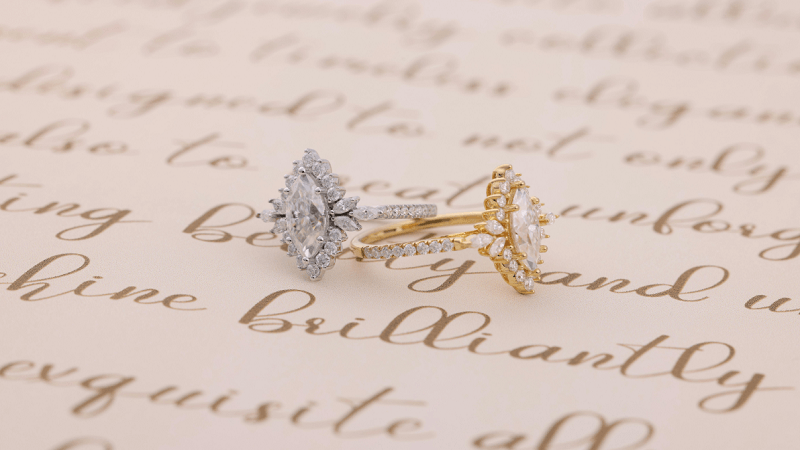
A concise primer presents marquise cut engagement rings as a deliberate choice for those seeking elongation and vintage flair. The guide examines proportions, setting security, and visible quality factors like symmetry and the bow‑tie, plus practical tradeoffs among carat, color, and clarity. It outlines protective mounting options, metal and side‑stone combinations, and buying strategies, then moves into the specific checks every buyer should make next.
Quick Checklist : Is a Marquise Ring Right for You?
Considering face shape, lifestyle, and personal style will determine whether a marquise engagement ring is the right choice. The checklist evaluates proportions, durability, and daily habits: assess finger length and ring size preferences, prioritize secure settings to protect pointed ends, and opt for higher clarity to reduce visible inclusions.
Note marquise symbolism in elongation and elegance, and reference historical significance to contextualize its resurgence among vintage and modern tastes. Budget for cutting and setting costs, choose complementary metal tones, and confirm comfort for active routines. Conclude with a trial wear period and professional appraisal before purchase.
How Marquise Shape Flatters Different Fingers
How does the marquise cut alter visual proportions across different hands and finger types? The marquise’s elongated silhouette visually lengthens short finger length, creating an elegant elongation that balances wider proximal joints.
On long fingers, it emphasizes slenderness without appearing overly narrow when paired with proportionate band width. For small hand size, a modest carat weight and delicate setting prevent overwhelm while retaining dramatic presence; larger hand size accommodates bolder spans and halo designs.
Side stone choices and mounting height further refine perceived proportions. Designers recommend evaluating finger length and hand size together to select a marquise that flatters anatomy and current style trends.
Marquise Proportions: Sparkle Versus Length
Having established how marquise cuts interact with finger proportions and hand size, attention turns to the internal balance between brilliance and length. Practitioners evaluate marquise brilliance against length proportion to achieve visual impact without sacrificing scintillation.
Shorter proportions favor concentrated light return, enhancing perceived sparkle; elongated proportions emphasize finger-lengthening and face-up carat size but can diffuse brilliance if facets are stretched.
Contemporary trends favor moderate elongation typically a 1.75-2.25 length proportion balancing trend appeal and fire. Jewelers recommend inspecting samples under varied lighting and prioritizing proportion over maximal length to guarantee the marquise remains lively, wearable, and visually proportional to its setting.
Spotting Quality: Cut, Symmetry, and the Bow‑Tie Effect
Clarity of performance in a marquise comes down to three interrelated attributes: precise cut, mirror-like symmetry, and the management of the bow‑tie dark zone. Evaluators assess faceting accuracy and tip proportions to maximize sparkle intensity without sacrificing length appearance.
Symmetry is quantified by equal lobes and aligned girdle planes; misalignment degrades light performance and focal balance. The bow‑tie is tolerated when narrow and centered; wide, uneven shadows signal poor cutting. Buyers are advised to examine stones under varied lighting, request imaging or ASET/ideal-scope data, and prioritize measurable optical outcomes over marketing descriptions.
Best Settings for Marquise Rings (Style + Protection)
After evaluating cut, symmetry, and bow-tie behavior, the choice of setting becomes the next determinant of both appearance and durability for a marquise engagement ring. Designers favor prong settings, often six or V-prongs at the tips, to maximize light return while safeguarding fragile points. For minimalist, modern aesthetics, shared-prong bands elongate the finger and emphasize length.
Bezel settings deliver superior protection, encasing the stone’s girdle and reducing chip risk, though they slightly mute brilliance. Tension and halo variations remain popular: tension for contemporary drama, halo for perceived size and added security. Selection balances desired sparkle, lifestyle, and long-term maintenance.
Balancing Carat, Color, and Clarity for Value
Striking the right balance among carat, color, and clarity determines both perceived value and long-term satisfaction when selecting a marquise engagement ring. The buyer should prioritize carat weight to achieve desired presence while recognizing marquise’s elongated profile maximizes perceived size.
Color grading around G–I often read white on the finger without premium cost; matching clarity scale ratings to personal preferences SI1 VS2 keeps inclusions invisible at normal viewing distances. Consider how marquise and other diamond shapes reflect light differently; table and bow‑tie effects demand attention. Practical budget considerations guide compromises, aligning visual impact with investment goals.
Metals, Band Widths, and Side‑Stone Choices for Marquise Rings
When choosing metals, band widths, and side stones for a marquise ring, each decision should be framed by how it affects silhouette, durability, and visual balance. The guide recommends metal options platinum for strength and white gold for brighter, cost-efficient contrast; yellow or rose gold to warm elongated profiles.
Narrow bands (1.5–2.5mm) emphasize length; wider bands (3.5mm+) add presence and support larger center stones. Band styles such as pavé, bezel, and cathedral alter sparkle and protection. Side-stone choices tapers, baguettes, or round brilliants should complement the marquise point and maintain symmetry without overpowering the center.
Where to Buy and Negotiation Tips for Best Price
Compare retailer types and sourcing models to pinpoint where a marquise engagement ring can be bought at the best value: Brick and mortar independents offer hands-on inspection and local reputation checks; Brand-name jewelers provide consistent warranties and financing but typically carry higher markups;
Online specialists and direct-to-consumer platforms undercut traditional overhead with lower prices and transparent grading, though buyers should verify return policies and third-party certification; Auction houses and estate dealers can yield rare cuts or better prices on pre-owned stones, contingent on provenance and condition. Shoppers should use price comparison, solicit competing quotes, leverage negotiation tactics, and document certificates when buying from online retailers or local jewelers.