
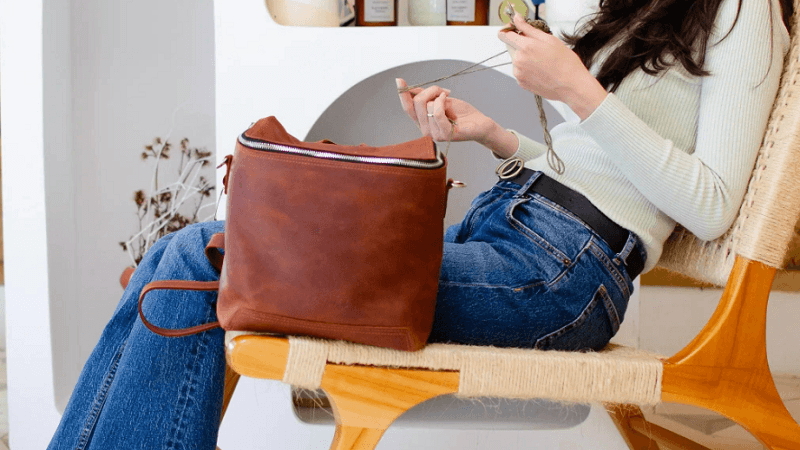
To organize projects anywhere, you need to designate a dedicated project bag, use modular tool pouches, create a reusable packing checklist, and establish a post-outing reset routine.
These portable hobby ideas stop the familiar frustration of reaching into a tote between appointments only to find a tangled skein, a loose needle rolling to the floor, and no scissors in sight.
Learning how to keep knitting supplies organized transforms your crafting from a scrambled mess into a seamless, relaxing experience wherever you go.
1. Give One Bag One Job
Finding ways to relax is crucial, especially considering that the total cost of job stress incurred by the economy ranges from $250 to $300 billion annually.
Crafting offers an excellent escape, but only if your supplies are ready to go when you are.
Instead of tossing yarn and needles into whatever tote is closest to the door, designate one specific carrier as the permanent home for one active project.
When your craft bag essentials live securely in a dedicated spot by the couch or in the car, you stop scrambling to assemble a project before leaving.
The right carrier fundamentally changes this dynamic by providing an internal structure that prevents yarn from shifting and protects delicate needles from snapping.
For example, Thread and Maple’s crafted knitting bag is a practical option that handles real-life movement, offering durable material protection that holds up beautifully whether tucked behind a car seat or resting on a waiting room floor.
When you stop improvising with everyday totes and use something genuinely designed for portable making, your project stays protected, untangled, and ready the moment you sit down.
2. Let Small Pouches Do the Heavy Lifting
A dedicated bag only works if the interior does not become a bottomless pit. Rather than searching through a deep main compartment mid row, use compact pouches to group your tools by function.
Keep one small zip pouch strictly for notions like stitch markers and a tape measure, alongside a separate roll-up case for scissors, tapestry needles, and a needle gauge.
This approach to knitting organization means you can reach directly for the exact pouch you need instead of emptying the whole bag onto a coffee shop chair.
Modular setups keep your essential tools visible and accessible without requiring reorganization between outings.
More importantly, this containment strategy protects your delicate tools from damage and prevents loose metal notions from working their way into soft yarn fibers.
Knowing exactly where your accessories live eliminates frustration and keeps your focus entirely on the joy of creating.
| Pro Tip: Use clear or mesh pouches to make your tools visible at a glance. Seeing your stitch markers or measuring tape without unzipping saves time and reduces frustration during quick crafting sessions. |
3. Build a Simple Project Checklist You Can Reuse
Figuring out how to keep knitting supplies organized on the go often comes down to removing the mental load of packing.
A short, reusable checklist tucked in your bag or saved on your phone ensures you never arrive at an appointment only to realize you left an essential tool on your coffee table.
A reliable curator list typically covers the right needles for the current pattern, the required yarn, small snips, a measuring tape, a row counter, and a printed or digital pattern reference.
If you are unsure what a specific weight or fiber might require when building out your personal list, many crafting resource sites provide excellent starting points for understanding standard project requirements and needle sizing.
This checklist is not about rigid rules; it is simply a way to ensure that when you finally get a moment to sit and knit, you actually have everything you need to begin.
While some evidence suggests that crafts-based interventions may benefit mental health, the real relaxation starts by having all your tools prepared in advance.
| Key Insight: A well-prepared project bag acts as a “portable sanctuary.” By using a checklist, you guarantee that your hobby remains a source of stress relief rather than another source of organizational anxiety. |
4. Make Resetting the Bag Part of Coming Home
The most effective portable hobby ideas rely on maintenance, which means your system only works if it resets.
After returning from an outing, take two minutes to restore your project bag before putting it away.
Remove any stray threads, refold a pattern that shifted, tuck notions back into their proper modular pouches, and top up any craft bag essentials that ran low.
Frame this brief reset not as a tedious household chore, but as a small ritual of care for your creative practice.
The tools that support your work deserve the same consideration as the work itself. Taking a moment to tidy up is what makes your next outing just as seamless and relaxing as the first.
When you establish this simple habit, you eliminate the frantic search for supplies the next time you want to head out the door.
Putting It All Together
Picture yourself back in that same waiting room, but this time you reach into your bag and everything is exactly where it belongs.
Figuring out how to keep knitting supplies organized is ultimately about removing small daily frustrations so your creativity has room to breathe.
Start simple by choosing one bag and designating it for one project so the system stays easy to maintain.
Once this habit is in place, bringing a project along stops feeling like an effort and becomes a seamless, natural part of your day.
| Author Profile: Thread & Maple is the leading supplier of artisan-crafted leather bags and organizational carriers for knitters, crocheters, and fiber artists, with accessories that beautifully complement their core collection. |