
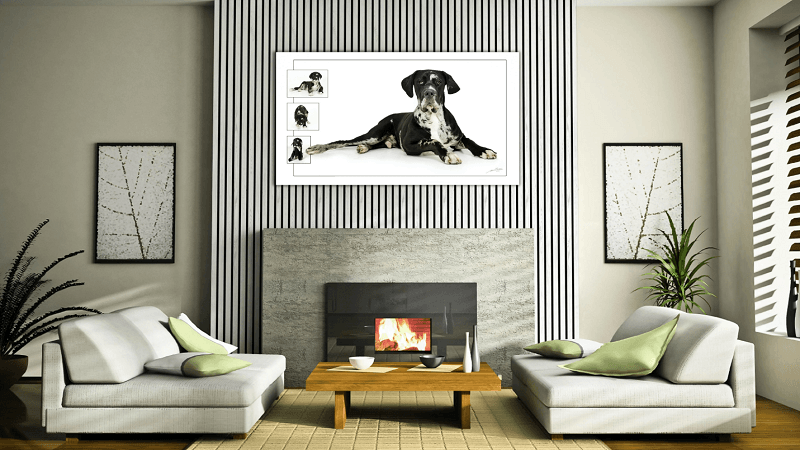
Dundee Deco 3D wall panels deliver easy wall upgrades and architectural dimension for homeowners, renters, and DIY decorators seeking a quick home refresh without major renovations.
This comprehensive review evaluates their visual impact, peel-and-stick installation process, and long-term material durability across four specific upgrade methods.
We have analyzed technical specifications, material performance data, and practical application techniques to assess real-world reliability.
You will discover which feature wall ideas best suit your interior layout, humidity levels, and overall design goals.
Reasons Your Walls Look Unfinished
You have decluttered the room, rearranged the furniture multiple times, and finally found the right rug, yet the space still feels plain and unresolved.
The specific visual problem often lies with bare, flat walls that lack a distinct focal point. Furniture and floor layout alone cannot fix what the vertical spaces are doing wrong.
When a room feels stagnant despite your best efforts, intentional wall design is typically the missing layer.
This guide introduces an upgrade framework to solve that exact problem. We will cover visual anchoring through feature walls, tactile depth through added texture, illumination and composition through lighting and art placement, and the practicality of quick-install options.
This progression moves your space from needing a bold statement to achieving a highly refined finish.
These upgrades are accessible, budget-friendly, and designed to work in real homes rather than highly styled magazine shoots.
Whether you are dealing with flat apartment walls or a dated suburban build, there is a wide range of options available to suit different decorative styles, budgets, and DIY skill levels.
| Key Insight: Furniture and floor layouts cannot fix what your vertical spaces are doing wrong. Adding an intentional wall design is the critical missing layer that transforms a stagnant room. |
Pros and Cons of Easy Wall Upgrades
No single wall upgrade works perfectly for every space, budget, or skill level. Some techniques require more DIY experience, some demand a larger financial investment, and some involve more commitment in terms of permanence.
Gaining a balanced understanding of each approach helps you choose the right path with confidence.
The table below compares key features and tradeoffs across the upgrade types covered in this guide, helping you match each method to your specific situation and aesthetic goals.
| Feature / Aspect | Pro or Con | Explanation |
|---|---|---|
| Feature wall creation | Pro | Creates an immediate focal point that anchors the room visually |
| Feature wall creation | Con | Requires planning and commitment to a color or material choice |
| Textured wall panels | Pro | Adds dimensional interest without paint or major installation work |
| Textured wall panels | Con | Requires proper surface prep for adhesive applications |
| Lighting and art placement | Pro | Low-cost, reversible, and dramatically changes the perceived finish |
| Quick-install options | Pro | Renter-friendly and removable; no tools or contractors needed |
| DIY execution overall | Pro | Saves labor costs and allows full creative control |
Dundee Deco 3D Wall Panel Ratings
| Category | Rating |
|---|---|
| Visual Impact and Design Range | 9/10 |
| Ease of Installation | 9/10 |
| Material Quality and Durability | 8/10 |
| Versatility Across Spaces | 9/10 |
| Maintenance and Longevity | 8/10 |
| Value for Money | 9/10 |
Visual Impact and Design Range
Dundee Deco panels deliver an immediate visual upgrade over flat painted surfaces. Raised geometric and organic patterns create depth that reads differently depending on light angles, giving walls a dynamic quality.
The extensive range spans minimalist linear designs for contemporary interiors through to heavily textured reliefs for industrial spaces. This breadth makes it possible to easily match the panels to an existing room palette.
Ease of Installation
One of the most consistent strengths of Dundee Deco’s textured 3D wall panel range is its accessibility for DIY installers.
Lightweight panels reduce physical strain and make solo installation realistic even on larger walls.
Peel-and-stick formats require no adhesive and minimal mess, while standard formats use construction adhesive for a permanent bond.
Installation steps follow a straightforward grid-based layout that most homeowners can manage in a single afternoon.
Material Quality and Durability
Dundee Deco offers 3D wall panels across core material types, including PVC, styrofoam, and FRP, each engineered for specific performance conditions.
FRP panels are the most robust and rated for fire resistance, making them appropriate for commercial applications.
PVC panels are moisture-resistant and easy to clean, giving them a strong performance profile in kitchens and bathrooms.
Styrofoam panels provide thermal and sound insulation benefits alongside their decorative function.
Versatility Across Spaces
The panel range performs well across a wide range of interior contexts, from bedroom accent walls to commercial display environments.
Moisture-resistant PVC variants specifically extend usability into rooms that would typically exclude textured wall treatments.
Commercial-grade FRP panels open the product range to hospitality and retail applications. Different panel depths and pattern scales allow designers to calibrate the visual intensity of any space.
Maintenance and Longevity
Ongoing maintenance for 3D wall panels is minimal by design. PVC and FRP panels can be wiped clean with a damp cloth, and neither material supports mold growth.
Styrofoam panels require gentle handling for dusting but resist moisture without special treatment.
The panels do not require sealing or periodic refinishing, which distinguishes them from natural material alternatives that demand more ongoing care.
Value for Money
Priced between approximately $9.99 and $399.99, depending on panel type and quantity, these 3D wall panels sit comfortably in the mid-market range.
They deliver material quality that outperforms budget imports while remaining well below the cost of professional renovation.
Standard-size panels ship free, which means that the landed cost for larger projects is. The durability of the materials means the cost-per-year calculation improves significantly over time compared to paint or wallpaper.
3D Wall Panels vs Traditional Wall Treatments
This comparison evaluates Dundee Deco 3D wall panels against traditional flat-painted walls.
The comparison is limited to surface applications and performance characteristics, covering the factors that matter most in a DIY home upgrade context. We analyze installation complexity, durability, maintenance, and visual impact.
The goal is not to declare a single winner across all use cases but to map which solution performs best under which conditions.
This allows you to make an informed selection based on your specific room architecture, budget constraints, and personal skill level.
| Feature / Metric | Dundee Deco 3D Wall Panels | Flat Paint (DIY) |
|---|---|---|
| Installation complexity | Low: peel-and-stick or adhesive; no professional tools | Low; brush and roller application |
| Visual depth/texture | High: raised 3D relief creates a dimensional effect | None; flat surface finish |
| Moisture resistance | High: (PVC and FRP options) | Medium with moisture-resistant paint |
| Removability | Medium: peel-and-stick is fully removable | Low; repainting required |
| Maintenance | Very low: damp cloth cleaning | Medium; touch-up repainting required |
For visual impact and material durability, 3D wall panels clearly lead since the raised relief cannot be replicated by print or flat paint.
The moisture-resistance of PVC and FRP formats extends the use case into rooms where wallpaper typically fails.
Flat paint is best understood as a base layer rather than a standalone upgrade.
| Key Insight: While standard paint and wallpaper provide cost-effective base layers, they completely lack the dynamic shadow play and dimensional depth that textured 3D panels bring to an accent wall. |
Expectations for 3D Wall Panels
Dundee Deco delivers a well-engineered decorative wall panel range that fulfills its core promise of dimensional visual interest, straightforward installation, and enduring material quality.
The product range is wide enough to address genuinely different rooms, and the price structure makes experimentation highly affordable.
However, results depend strictly on surface preparation, adhesive selection, and choosing the right material type for the specific environment.
Panels installed on poorly prepared surfaces or in conditions outside their material rating will underperform.
Managed within these basic parameters, the product consistently delivers the easy wall upgrade experience the brand promotes.
Best Use Cases for 3D Wall Panels
These panels perform best in environments where they can deliver the most noticeable upgrade.
Perfect locations include living room feature walls behind media units, bedroom accent walls behind headboards, and home office walls that add visual interest to video call backgrounds.
PVC panels are brilliant for bathroom surrounds, while FRP panels excel as commercial retail backdrops.
Textured panels have particular strength in rooms with minimal architectural detail, such as apartments and newer builds with flat, featureless walls.
In these environments, a single paneled accent wall introduces the kind of structural character that would otherwise require built-in professional carpentry.
When to Skip 3D Wall Panels
Buyers who require a seamless, absolutely flush wall surface for specific art displays or formal traditional interiors may find the three-dimensional profile unsuitable.
Additionally, buyers dealing with walls that have significant moisture damage, loose plaster, or severe structural issues must address those underlying problems before applying any surface treatment.
Those working with extremely tight budgets who need to cover very large square footage may find that flat paint or basic peel-and-stick wallpaper offers a more economical solution. This allows them to reserve the 3D panel investment for a single accent wall.
Long-Term Durability and Care
Under normal residential conditions, PVC and FRP panels maintain their finish and structural integrity without degradation for years.
They do not absorb moisture, support mold, or require seasonal maintenance, protective coating, or professional servicing.
This longevity strongly outpaces wallpaper, which frequently lifts at the seams over time.
Cleaning is limited to regular dusting and occasional damp cloth wiping for the PVC and FRP formats.
For EPS foam panels, gentle dusting is sufficient, taking care to avoid abrasive cleaning tools that could damage the raised surface detail. No specialist chemical cleaning products are required.
Frequently Asked Questions
Can I use 3D wall panels in a bathroom or kitchen?
Yes, and this is one of the more practical advantages of the Dundee Deco 3D panel range.
PVC panels are specifically engineered for high-humidity environments and are moisture-resistant, making them well-suited to bathroom feature walls, shower surrounds, and kitchen backsplash areas.
FRP panels also perform well in commercial kitchen environments due to their impact and moisture resistance.
Can 3D wall panels be painted to match my room’s color scheme?
Most 3D wall panels in the Dundee Deco range can be painted to match your preferred color scheme.
PVC and FRP panels accept standard interior latex and acrylic paints well, making integration seamless.
One important exception is that EPS foam panels cannot be painted, so always confirm the material type before purchasing if painting is a priority.
How do I install 3D wall panels, and do I need professional help?
Installation is designed to be DIY-accessible without professional tools or contractors. Peel-and-stick panels require only clean, smooth surface preparation.
Standard panel formats use construction adhesive applied to the back of the panel. Both methods follow a straightforward grid-based layout that most homeowners easily complete in a single afternoon.
Are 3D wall panels a good option for renters?
Peel-and-stick 3D wall panels are specifically designed to address the renter’s need for reversible upgrades.
When removed correctly, they do not pull paint or damage drywall, making them highly compatible with standard lease terms.
Standard adhesive-applied panels are generally better suited to owned properties where permanence is preferred.
How do I clean and maintain 3D wall panels over time?
Maintenance requirements are intentionally minimal. For PVC and FRP panels, regular dusting combined with an occasional wipe-down using a damp cloth is all that is needed.
For EPS foam panels, gentle dusting with a soft brush is recommended, and abrasive tools should be avoided entirely. No panels in the range require periodic refinishing.