
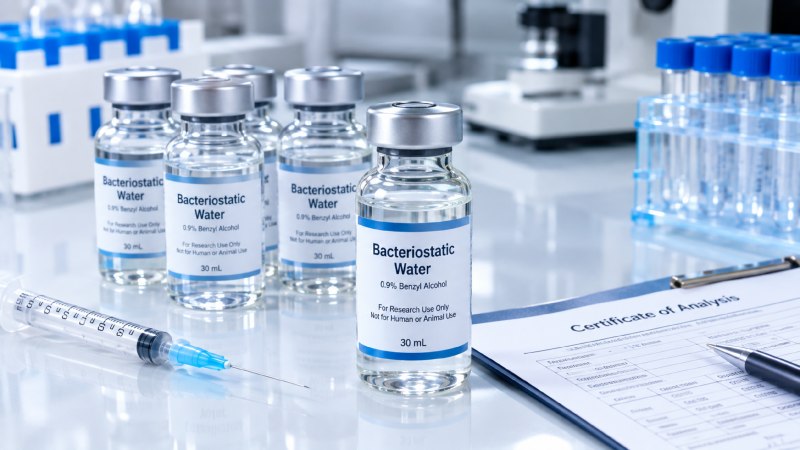
Buying lab supplies online is a bit of a gamble if you don’t know what separates a good product from a mediocre one. Bacteriostatic water is a great example. It looks generic, the labels all read about the same, and it’s easy to just grab the cheapest option and assume it’s fine. Sometimes it is. Sometimes it isn’t. Here’s what actually matters.
First, what the stuff even is. Bacteriostatic water is sterile water with a small amount of preservative added, usually 0.9% benzyl alcohol. The preservative isn’t there to sterilize it in the moment, it’s there to stop bacteria from growing over time. That’s the key difference between it and plain sterile water.
Plain sterile water is clean while sealed, but the second it’s opened there’s nothing protecting it, so it’s effectively single use. The preservative in the bacteriostatic version keeps bacteria from taking hold after opening, which means a sealed vial stays usable for a while. In a research setting that’s just more practical.
One thing to be clear on. This is a research and laboratory material. It’s supplied strictly for research, laboratory, or analytical use, and nothing here is medical advice of any kind.
Now the part that actually separates suppliers.
Packaging first. Glass is inert, meaning it won’t react with what’s inside it the way some plastics can. Plenty of labs won’t use anything but glass for that reason. So if a supplier is using glass vials, that’s a good sign they care about keeping the contents clean and consistent.
Documentation second, and this is the big one. A supplier that gives you a Certificate of Analysis, showing the actual preservative content and pH, is letting you verify what you’re buying instead of asking you to trust the label. That’s a real difference in a field where consistency matters. If you’re comparing options, buying bac water from a source that produces domestically and publishes its COA gives you a lot more to go on than a generic product with zero paperwork behind it.
Then there’s the basic stuff people skip. Where is it made? Domestic production under controlled conditions is worth more than an imported product with an unknown supply chain. Is it actually in stock, or is it perpetually backordered? For a supply you need to reorder, reliability counts.
Storage and handling round it out. Keep vials cool and dry, roughly 68 to 77 degrees Fahrenheit, out of direct sunlight. A cabinet is fine. Refrigerate after opening if you want. Use an opened vial within about 28 days rather than keeping it indefinitely. And before drawing from one, wipe the stopper with 70% isopropyl alcohol and let it dry all the way first. Simple habit, prevents a lot of avoidable contamination.
The bottom line is that not all of these products are equal even when they look it. Pay attention to packaging, documentation, and sourcing, handle it sensibly once it arrives, and you’ll get consistent results instead of rolling the dice every time you reorder.
All products of this kind are intended solely for research, laboratory, or analytical purposes and are not approved or formulated for use in humans or animals.