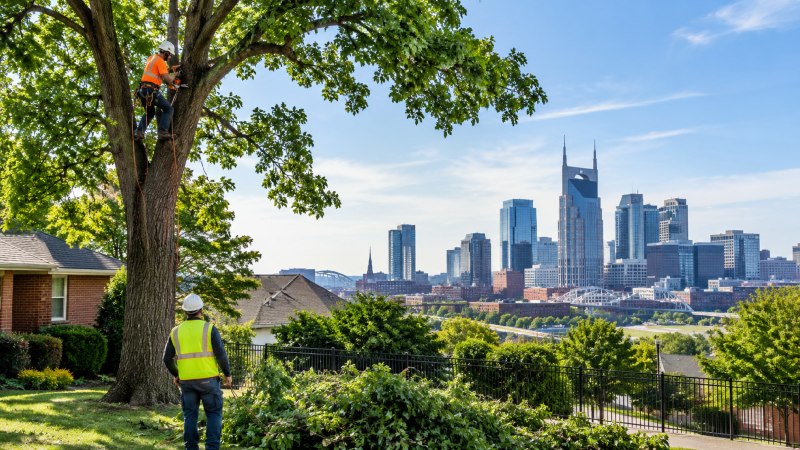
Nashville’s neighborhoods are shaped by trees. Mature shade trees soften busy streets, cool patios and sidewalks, frame historic homes, and make shared outdoor spaces more comfortable. Building a safer urban tree plan means looking beyond appearance and treating each important tree as part of the property’s long-term infrastructure. When questions involve defects, storm damage, difficult access, or large limbs over a home, guidance from qualified arborists in Nashville TN can help property owners understand practical options.
That approach matters across Davidson County, where new construction, compacted soils, changing drainage patterns, summer heat, and strong thunderstorms can all place stress on urban trees. A healthy tree plan balances safety with preservation. It gives attention to immediate hazards, but it also protects the shade, habitat, stormwater benefits, and neighborhood character that established trees provide
Why Tree Planning Matters In Nashville
An urban tree plan is not just for large commercial sites or public parks. A single large oak beside a driveway, a row of young trees along a rental property, or a wooded edge behind a neighborhood can affect daily safety, maintenance costs, drainage, and comfort. Mature trees are especially valuable because they already have developed canopies and established root systems. Replacing a mature tree may be appropriate in some cases, but a newly planted tree cannot immediately provide the same level of shade or visual presence.
Nashville’s urban canopy also has community value. Metro Nashville recognizes that tree canopy contributes to air quality, stormwater management, public health, economic benefits, and quality of life. The city’s focus on protecting retained trees and planting quality trees makes a property-level tree plan part of a larger local effort to maintain a more livable environment.
A useful plan does not assume every old tree is unsafe or every young tree is problem-free. Instead, it asks practical questions. Is the tree healthy? Does it have enough root space? Are branches growing toward a roof, driveway, play area, or utility line? Has grading, trenching, or repeated vehicle traffic changed the soil around it? Answering these questions early gives owners more options than waiting until a visible decline or storm damage occurs.
Start With A Basic Tree Inventory
A tree inventory is a straightforward record of the trees that matter most on a property. It is useful for a homeowner’s yard, an apartment complex, a church campus, a homeowners’ association, or a small business site. The inventory does not replace an on-site assessment by a trained professional, but it creates a baseline for recognizing changes.
What To Record
- Location, such as front yard, rear fence line, parking area, or common green space.
- Approximate height, trunk width, and canopy spread.
- Tree species, if known, or a clear description and photographs for later identification.
- Visible concerns, including dead limbs, trunk wounds, cavities, cracks, leaning, exposed roots, or fungal growth.
- Nearby targets, such as roofs, garages, sidewalks, vehicles, outdoor seating, fences, and utility lines.
- The last known date of planting, pruning, storm damage, construction work, or inspection.
Photograph each tree from several angles, including the base of the trunk and the full canopy when possible. Repeat the photographs after major storms, landscaping changes, or one full growing season. Comparing images can reveal whether a lean has increased, a canopy has thinned, or a wound has changed.
How To Spot Common Tree Risks
Property owners do not need to diagnose every tree condition, but they should recognize signs that deserve a closer look. Large dead limbs, hanging broken branches, deep cracks in major stems, and a sudden lean can all raise safety concerns. Fresh soil lifting near the trunk base may indicate root movement, particularly after saturated ground and high winds.
Other warning signs can be more gradual. Mushrooms or other fungal growth near the base may warrant evaluation, especially when accompanied by cavities, soft wood, or canopy decline. A tree that leafs out unevenly, loses foliage early, or shows a major change in leaf color may be reacting to pests, disease, drought, root disturbance, or another stress factor. One symptom does not automatically mean a tree must be removed, but multiple symptoms should not be ignored.
Photorealistic editorial image of a mature healthy shade tree in a Nashville residential yard, with a clean neutral background, soft controlled daylight, and a polished commercial landscaping feel; isolated composition with minimal surrounding detail.
Keep people away from visibly damaged trees and avoid climbing, cutting, or pulling on broken limbs. Never attempt work near an energized line. If a branch is touching a utility line or a fallen tree has brought down wires, stay clear and contact the utility provider or emergency services as appropriate.
Use Pruning To Improve Tree Structure
Pruning should have a defined purpose. In Nashville yards, that may mean removing deadwood over a patio, creating safe clearance above a driveway, reducing branch interference with a structure, or guiding the form of a young tree before weak branch unions become larger problems. Pruning for appearance alone can create unnecessary wounds and reduce the useful canopy.
Core Pruning Principles
- Address dead, broken, rubbing, or clearly damaged branches first.
- Make cuts just outside the branch collar rather than leaving long stubs or cutting flush against the trunk.
- Keep live branch removal proportionate to the tree’s condition and ability to recover.
- Avoid topping, which removes large portions of the canopy and can encourage weak replacement growth.
- Use clean, sharp tools for small work, and seek trained assistance for large limbs, climbing, or complex cuts.
Young trees often benefit from early structural pruning. For example, a newly planted tree with two competing main stems may need careful corrective pruning while cuts are still small. Older trees need a more conservative approach. Their goal is usually risk reduction and retention of a healthy canopy rather than forcing a dramatic change in shape.
Prepare Trees Before Severe Weather
Nashville residents know that heavy rain, gusty winds, thunderstorms, and saturated soils can arrive quickly. The best time to prepare is during calm weather, when there is time to inspect trees, schedule work, and clear potential targets from beneath questionable limbs. Waiting until a storm warning is issued often limits what can be done safely.
- Walk the property at least once before the season of frequent storms and note obvious deadwood or damaged branches.
- Check access routes, gates, and driveways that could be blocked if a limb falls.
- Move vehicles, grills, furniture, and play equipment away from trees with known concerns when severe weather is expected.
- Keep insurance information, photos of important trees, and relevant contact numbers accessible.
- After a storm, inspect from the ground and document damage before cleanup begins.
- Stay away from downed wires, suspended limbs, and trees that are leaning onto another tree or structure.
Storm readiness also starts at planting time. A tree with appropriate space, sound early structure, and roots protected from compaction is generally better positioned to handle ordinary environmental stress than one crowded between pavement, utilities, and buildings.
Choose The Right Tree For The Right Place
Fast growth and attractive flowers may be appealing, but they should not be the only reasons to choose a tree. A better question is whether the species can mature successfully in that exact Nashville site. Consider the mature canopy size, soil moisture, sunlight, drainage, nearby pavement, and available root area before selecting a tree.
Overhead lines require particular care. Metro Nashville’s recommended and prohibited tree list distinguishes between canopy trees and smaller options and provides guidance on placement near power lines. Choosing a tree that naturally fits under utilities is safer and more sustainable than repeatedly cutting back a species that wants to grow much taller.
Review The Site Before Planting
- Measure the area available for the mature canopy, not only the space occupied by the young tree.
- Identify overhead utilities and call 811 before digging near underground utilities.
- Check whether water stands after rain or drains away too quickly.
- Consider sidewalks, foundations, driveways, septic components, and visibility at intersections or entrances.
- Choose a variety of suitable species across a larger property rather than relying on one tree type.
A smaller tree placed well can outperform a large tree placed poorly. It will need fewer corrective cuts, face less conflict with utilities and structures, and have a better chance to develop a stable form.
Protect Roots During Construction And Landscaping
Root damage is one of the most overlooked threats to urban trees. A tree may look healthy immediately after construction, but later decline because the soil was compacted, roots were cut during trenching, or new soil was added over the root zone. Parking equipment beneath a canopy, storing materials against a trunk, and changing the surrounding grade can all create long-term stress.
Before work begins, identify trees worth preserving and establish a visible protection area. Nashville’s guidance on tree protection during construction emphasizes keeping construction activity and trenching outside the canopy when possible, and using sturdy, high-visibility barriers to reduce soil compaction.
Practical Root Protection Steps
- Include tree protection expectations in contracts and site plans before equipment arrives.
- Install fencing around the protected area and do not use it as a storage zone.
- Plan utility routes and irrigation lines to avoid unnecessary root cutting.
- Do not pile mulch, soil, gravel, or construction debris against the trunk.
- Inspect preserved trees after construction and continue monitoring through the next growing seasons.
When To Remove, Support, Or Preserve A Tree
Tree removal can be the right decision when a tree is dead, structurally unsound, severely damaged, or creating a serious and uncorrectable hazard. Still, removal should not be the automatic response to every cavity, lean, or damaged limb. Some conditions can be addressed with selective pruning, improved soil care, root-zone protection, or a support system designed for a specific structural concern.
Preservation May Be Appropriate When
- The tree is healthy overall, and the concern is limited to a manageable branch or site issue.
- Targeted pruning can reduce risk without removing excessive live canopy.
- Nearby construction can be redesigned or controlled to protect roots.
- The tree provides meaningful shade, screening, wildlife value, or neighborhood character.
Removal May Be Reasonable When
- The tree is dead or has declined to the point of no realistic recovery.
- A major defect presents a serious risk to people, buildings, or heavily used areas.
- Storm damage has left the tree unstable or unsafe to retain.
- A qualified assessment finds that alternatives would not produce an acceptable level of safety.
Before approving major work, ask for a clear explanation of the issue, the expected result of pruning or removal, and what follow-up care may be needed. If removal is necessary, plan the replacement before the site is empty. The best replacement tree is one chosen for the actual space, not merely for quick visual impact.
Build A Simple Annual Care Plan
A consistent seasonal routine makes tree care more manageable. The exact timing may vary with weather and species, but the following schedule provides Nashville property owners with a useful framework.
Winter
- Inspect bare branch structure, major unions, and trees near roofs, driveways, and walkways.
- Schedule appropriate structural pruning and remove accessible deadwood where safe.
- Review the inventory and prioritize trees that need professional evaluation.
Spring
- Watch for leaf emergence, pest activity, poor canopy development, and signs of storm injury.
- Refresh the mulch in a broad ring, keeping it away from direct contact with the trunk.
- Plant suitable new trees and establish a watering plan for their first growing season.
Summer
- Monitor soil moisture during dry periods, especially for recently planted trees.
- Look for wilt, scorch, unusual leaf drop, or thinning canopies.
- Inspect after heavy rain or strong wind, particularly around high-use outdoor spaces.
Fall
- Update photographs and note changes in health or structure.
- Address hazardous deadwood before periods of frequent storms.
- Plan next year’s planting, soil improvements, pruning, or construction protections.
Nashville-Specific Tree Care Challenges
Nashville, TN, presents unique environmental conditions that affect tree health and maintenance requirements in ways different from many other regions. Understanding these local factors helps property owners make better decisions about which trees to plant, how to care for them, and when to seek professional guidance.
Climate and Weather Patterns in Nashville, TN
Nashville experiences a humid subtropical climate with hot summers and mild winters. Summer temperatures frequently exceed 90 degrees Fahrenheit, and the combination of heat and humidity can stress trees that are not well-established or properly watered. Conversely, winter ice storms and freezing rain can damage branches and limbs that were weakened by summer stress or poor structure. Spring and fall bring moderate conditions but also frequent severe thunderstorms with high winds and heavy rainfall.
The sudden nature of Nashville’s severe weather events means that trees with weak branch unions or structural defects can fail rapidly. A tree that appears stable in calm weather might fail during a thunderstorm with sustained winds of 40 to 60 miles per hour, when the soil is saturated from heavy rain. This is why proactive structural pruning and storm preparation are especially important for Nashville property owners.
Soil Conditions Unique to Nashville, TN
Much of Nashville, TN, sits on limestone bedrock with clay soils that can be problematic for tree root development. Clay soils compact easily, drain poorly, and can create waterlogged conditions that stress tree roots. Conversely, on hillsides and in some neighborhoods, shallow soil over limestone may limit the depth available for root systems to develop.
New construction in Nashville often involves grading and fill that dramatically change the soil profile. A tree that thrived in its original soil environment may decline after nearby development raises or lowers the grade. Urban tree care in Nashville, therefore, requires attention to soil conditions before, during, and after any construction or landscaping work.
Urban Heat Island Effect in Nashville, TN
Nashville’s growing downtown and expanding neighborhoods create urban heat island effects, where pavement and buildings absorb and radiate heat, raising local temperatures compared to less-developed areas. Trees in these warmer urban zones experience accelerated growth, but also higher stress during drought periods and increased pest pressure. This makes consistent watering and health monitoring especially important for newly planted trees in Nashville’s urban core and commercial districts.
Common Pests and Diseases in Nashville, TN
Nashville’s humid climate creates favorable conditions for various tree pests and diseases. Emerald ash borer has affected ash trees across Nashville, TN, and Davidson County, making ash identification and management a practical concern for many property owners. Other pests include scale insects, spider mites, and wood-boring beetles that may be more active during hot, dry summers. Fungal diseases such as anthracnose and powdery mildew are also common in Nashville’s spring and fall weather patterns.
Regular inspection and early intervention are more effective than waiting for pest or disease symptoms to become severe. A qualified arborist in Nashville can identify emerging problems and recommend monitoring or treatment strategies that preserve tree health while minimizing chemical inputs.
Common Questions About Nashville Tree Care
How often should residential trees be inspected?
A general property walk at least once or twice a year is useful, with additional checks after major storms, construction activity, or a noticeable change in the tree. Trees near homes, driveways, playgrounds, and power lines deserve closer attention because the consequences of failure are greater.
Can a damaged tree recover after a storm?
Some trees can recover from limited branch damage, especially when the remaining structure is sound. The answer depends on the type and location of damage, the tree’s health before the storm, the extent of root disturbance, and what people or property could be affected if more failure occurs.
Is tree topping a good idea ever?
Topping is generally not a sound routine pruning practice because it removes large portions of the canopy, creates large wounds, and can lead to weakly attached replacement growth. If a tree has height or clearance concerns, targeted pruning or another appropriate management approach may be safer.
Wrap Up
A thoughtful tree plan helps Nashville property owners protect people, property, and the trees that contribute to the community’s character. Regular inspections, proper pruning, careful planting, root protection, and storm preparation can address many concerns before they become emergencies. When a tree presents a serious structural or safety issue, a professional assessment can help determine whether pruning, support, or removal is the most appropriate option. With consistent care and planning, Nashville’s trees can remain healthy, functional, and valuable parts of the landscape for years to come.