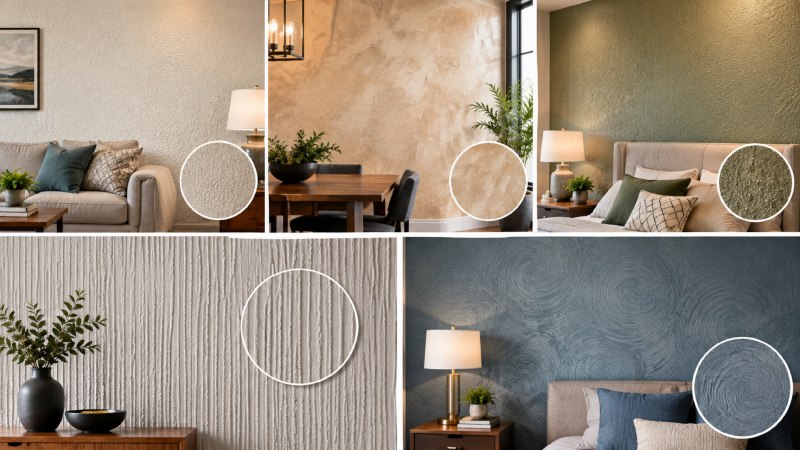
Textured wall finishes offer a practical way to add visual interest and depth to interior spaces while addressing common surface issues. Unlike flat paint, these treatments create subtle or pronounced patterns that interact with light, soft shadows, and room proportions. Homeowners and designers select them for both aesthetic reasons and functional advantages, such as concealing minor imperfections in drywall or plaster. The following five popular approaches demonstrate how different techniques can alter the character of living rooms, bedrooms, hallways, and other areas without requiring structural changes.
Orange Peel Texture
Orange peel remains one of the most widely used wall finishes in residential construction and remodeling. The name comes from its resemblance to the fine, dimpled surface of citrus fruit skin. Installers achieve the effect by spraying a thinned joint compound or specialized texture material onto prepared walls with a hopper gun and air compressor. Once dry, the surface receives primer and paint in the chosen color.
This finish, often selected as wall texture paint, provides a low-profile texture that softens the appearance of seams, nail holes, and slight irregularities. It performs well in high-traffic areas because the uniform bumps help mask everyday wear. Living rooms and bedrooms benefit from the gentle diffusion of light, which reduces harsh reflections from windows or lamps. The texture suits contemporary and traditional interiors equally, as the pattern stays understated enough to complement furniture and artwork rather than compete with them.
Maintenance involves regular dusting, since the small peaks can collect particles over time. Touch-ups prove straightforward when matching the original spray pattern, though professional equipment yields the most consistent results. Compared with smoother walls, orange peel offers greater forgiveness during minor repairs and remains a cost-effective choice for larger spaces.
Knockdown Texture
Knockdown texture starts with a process similar to orange peel but includes an additional step that produces a more distinctive, flattened look. After spraying the compound, the applicator waits briefly and then draws a wide drywall knife or trowel across the surface to knock down the raised peaks. The result is a mottled pattern with soft, irregular plateaus that suggest a refined stucco appearance.
This technique adds noticeable dimension without overwhelming a room. The varied surface catches light in interesting ways, creating gentle contrasts that make plain walls feel more substantial. It works particularly well in family rooms, dining areas, and entryways where a sense of warmth and texture supports comfortable gatherings. Mediterranean, Southwestern, and modern farmhouse styles often pair successfully with knockdown finishes because the pattern echoes traditional plaster work.
The flattened peaks make the surface somewhat easier to clean than fully peaked textures. Homeowners appreciate its ability to hide more pronounced drywall flaws than orange peel alone. Application requires timing and practice to achieve even coverage, so many projects involve experienced painters. Once complete and painted, the finish holds up for years under normal household conditions.
Venetian Plaster
Venetian plaster delivers a polished, stone-like surface through successive thin layers of lime-based or acrylic plaster mixed with marble dust. Craftspeople apply the material with steel trowels in overlapping strokes, building depth through multiple coats. Burnishing the final layer produces a smooth sheen that ranges from matte to highly reflective, depending on the desired effect and the amount of pressure applied during finishing.
The technique creates walls with natural color variation and a sense of movement as light shifts across the surface throughout the day. No two installations look identical because the hand application introduces subtle differences in tone and texture. Formal living rooms, master bedrooms, and feature walls in open-plan homes gain a refined presence from this finish. It pairs effectively with both minimalist furnishings and more traditional décor, providing a quiet backdrop that still commands attention.
Durability stands out as a key advantage. Properly applied and sealed Venetian plaster resists chips and maintains its appearance for decades. The material is breathable in many formulations, which supports better indoor air quality compared with some synthetic coatings. Cost and skill requirements place it at the higher end of textured options, and professional installation is generally recommended to achieve the characteristic marble-like quality. In humid climates, appropriate sealing prevents potential issues with moisture.
Sand Texture Finish
Sand texture paint incorporates fine silica or similar aggregates directly into the coating or as an additive mixed with standard paint. Application typically uses a roller or brush, producing a consistently gritty surface that feels slightly rough to the touch. The degree of texture can be adjusted by the amount of sand added, ranging from a light dusting effect to a more pronounced grain.
This approach suits rooms where a natural, grounded quality is preferred. Bedrooms and studies often benefit from the muted light diffusion and the way the surface softens hard architectural lines. The finish effectively conceals minor surface defects and provides a durable layer that resists scuffs better than flat paint alone. It adapts readily to neutral color schemes or earth-toned palettes that emphasize organic materials such as wood and stone.
Cleanup remains relatively simple with a soft brush or vacuum attachment, though the texture does hold dust more readily than smooth walls. DIY application is accessible for smaller projects, provided the wall is properly prepared and the mixture stays evenly distributed. For larger areas or consistent results across an entire home, professional painters ensure uniform coverage and avoid visible roller marks.
Comb and Swirl Patterns
Comb and swirl textures rely on tools rather than spray equipment to create intentional linear or circular designs. After applying a layer of joint compound or thick paint, the installer draws a notched trowel, specialized comb tool, or stiff brush through the wet material. Patterns may run in parallel lines, fan shapes, or continuous swirls, depending on the desired visual rhythm.
These finishes introduce movement and direction to walls, guiding the eye and altering the perceived scale of a space. Vertical combs can make ceilings appear higher, while horizontal or swirling patterns add horizontal flow suited to longer rooms. They work effectively as accent treatments behind beds or sofas, or as full-wall applications in hallways and powder rooms. The handcrafted quality distinguishes them from more uniform sprayed textures and allows customization to match specific design themes.
Skill level varies with the complexity of the pattern. Simple linear combs are achievable for careful DIYers, while intricate swirls often call for experienced applicators. The resulting surface can be painted in solid colors or glazed for additional depth. Maintenance focuses on gentle cleaning to preserve the raised edges. These patterns offer a creative alternative when standard textures feel too conventional.
Selecting among these options depends on several practical factors. Room function, existing architectural details, lighting conditions, and maintenance preferences all influence the final decision. Subtle finishes such as orange peel or light sand texture suit spaces that require flexibility for changing décor, while more dramatic treatments like Venetian plaster or knockdown create lasting focal points. Budget and whether professional help is available further narrow the choices. Regardless of the specific technique, textured walls change how light, color, and furniture interact within a room, providing a lasting improvement that goes beyond surface color alone. Guidance on interior paint colors and palettes can help coordinate hues effectively with these textured surfaces. Proper surface preparation and quality materials remain essential for any of these finishes to perform well over time.