
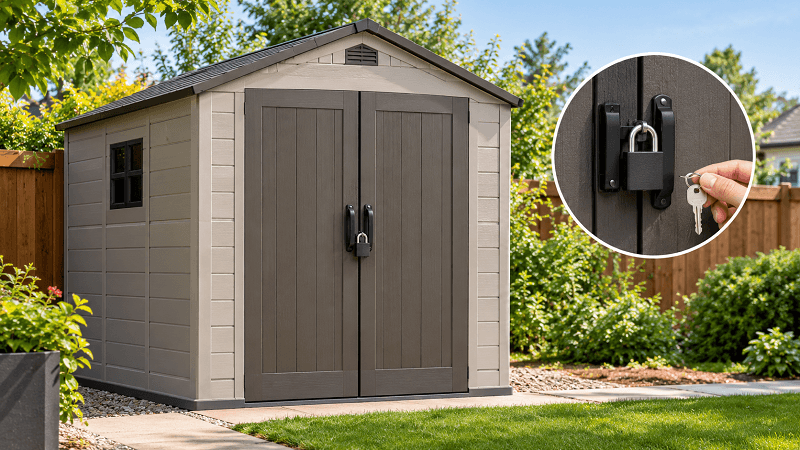
Yes, resin sheds are secure enough for most homeowners — but their security depends far more on the lock, the anchoring, and where the shed sits than on the wall material itself. A resin shed with a hardened disc padlock and a bolted-down floor is harder to break into than a wooden shed with a screwed-on hasp.
Below is a practical breakdown of how resin shed security actually works, which locks to buy, and what most people get wrong.
How Secure Is Resin Compared to Wood or Metal?
Resin sheds are built from high-density polyethylene, usually formed into double-walled panels. That construction matters for security in three ways:
- No rot, no rust. Wooden sheds fail at the hinges and door frame as the timber softens. Metal sheds corrode at the base. Resin panels stay dimensionally stable, so the door keeps meeting the frame squarely for years — and a door that closes tight is a door that’s harder to pry.
- Impact resistance over cut resistance. Polyethylene flexes rather than splinters. It absorbs blows well, but a determined person with a blade can cut it, just as they can cut through a metal panel or kick through a rotten plank.
- Steel where it counts. Better models reinforce the door frame, hinges, and floor from the inside. Look for internal hinge pins that can’t be tapped out from outside.
Here’s the reality of shed break-ins: almost nobody cuts through a wall. Thieves work the door because it’s fast and quiet. That’s where your money should go.
Do Resin Sheds Come With Locks?
Usually not. Most resin sheds ship with a molded lock hasp or pre-drilled handle designed to accept a padlock you supply. Some include a simple keyed latch that’s better described as a wind catch than a security device.
Check the specifications before you buy. Any decent shed from Keter Canada and similar resin models will list “padlock ready” or “accepts padlock” in the product details, along with the maximum shackle diameter the hasp will take — commonly 8 to 10 mm. Buy the largest padlock the hasp accepts.
Choosing the Right Shed Lock
| Lock type | Security level | Best for |
| Closed-shackle padlock | High | Everyday use — minimal shackle exposed to bolt cutters |
| Disc detainer padlock | High | Wet climates; resists picking and freezing |
| Hidden-shackle (puck) lock | Very high | Sheds with a flat hasp mount |
| Combination padlock | Medium | Shared access, low-value contents |
| Standard open-shackle padlock | Low | Deterrence only |
Three rules when choosing:
- Minimize exposed shackle. Bolt cutters need to be purchased. A closed-shackle or puck lock gives them almost nothing to grab.
- Match the metal. Boron-alloy or hardened-steel shackles resist cutting; brass and laminated steel do not.
- Weatherproof it. Outdoor-rated locks with sealed keyways and stainless internals won’t seize in a Canadian February.
Five Upgrades That Matter More Than the Lock
Anchor the shed. An unanchored resin shed can tip or shift. Most manufacturers sell anchor kits, or you can bolt the floor to a concrete pad or ground screws. This also protects against wind.
Anchor the contents. Run a hardened chain through bike frames and mower handles to a ground anchor bolted through the floor. If someone gets in, they still leave empty-handed.
Block the sightlines. Frosted or opaque wall panels beat clear windows. If your shed has windows, film them or shelve in front of them. Thieves target sheds they can see into.
Light it. A motion-activated floodlight aimed at the shed door is one of the cheapest deterrents available.
Reinforce the hasp. If the molded hasp feels flimsy, add an aftermarket steel hasp bolted — not screwed — through the door with carriage bolts and backing plates on the inside face.
Frequently Asked Questions
Can you cut through a resin shed? Yes, with a utility knife or reciprocating saw, though it takes time and makes noise. The same is true of vinyl siding, metal sheds, and thin plywood. Layered deterrence matters more than material.
Does a resin shed affect home insurance? Coverage for outbuilding contents varies by policy. Many insurers require evidence of forced entry, which means a visible, defeated lock. Photograph your setup and keep receipts for high-value tools.
What’s the best padlock for a plastic shed? A closed-shackle padlock with a hardened boron shackle, sized to the largest diameter your hasp accepts.
Can resin sheds be anchored to a deck? Yes — lag bolts through the floor into joists work, as long as the deck framing is sound.
Resin sheds are secure when you treat the shed as a container and the lock as the actual barrier. Buy padlock-ready, fit a closed-shackle lock, anchor the base, chain the valuables, and remove the sightlines. That combination defeats the opportunistic theft that accounts for the overwhelming majority of shed break-ins.