
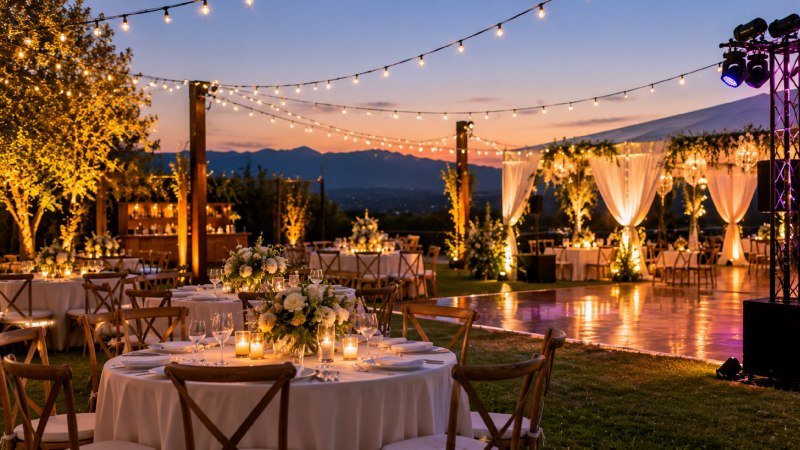
From String Lights to Full Production Design
A decade ago, a backyard reception or a community fundraiser under a tent relied on whatever ambient light the venue happened to offer, plus maybe a few strands of bulbs hung between posts. Guests adjusted their expectations accordingly, and photographers learned to work around shadows rather than against them. That approach has quietly disappeared from most well-planned events, replaced by a much more deliberate relationship with light itself.
Part of this shift tracks with how venues have changed. Barns, warehouses, rooftops, and open fields have become popular settings precisely because they offer character that a traditional ballroom lacks, but those same spaces often come with minimal built-in electrical infrastructure. Planners had to solve that gap somehow, and the solution that emerged was treating lighting as its own design category rather than an afterthought bolted onto decor.
Climate and scheduling pressures pushed this along too. Events now happen later into the evening, outdoors, in shoulder seasons when natural light fades fast, and hosts wanted their photos and atmosphere to hold up regardless of sunset time. What started as a practical fix for dim venues has turned into an expected layer of event planning, on par with seating charts and catering logistics.
What Planners Notice When Light Is Treated as Infrastructure
Ask anyone who has coordinated more than a handful of weddings or corporate galas, and they will tell you lighting changes the emotional temperature of a room faster than almost any other element. A space with flat, overhead fluorescent light feels clinical no matter how nice the linens are, while the same room with warm uplighting and a few well-placed pin spots reads as intentional and considered. This isn’t a matter of taste alone; it shows up in how guests behave, how long they linger, and how photographs turn out.
Vendors who specialize in this work have also observed a pattern in client requests over the past several years: fewer people ask for generic
mood lighting
mood lighting
and more arrive with specific references pulled from photos they have seen online. They want a particular color temperature, a specific silhouette effect on a dance floor, or lighting that mimics candlelight without the fire risk. That level of specificity means rental companies have had to carry broader inventories and train staff who understand both the technical and aesthetic sides of the work.
The evidence also shows up in budgeting conversations. Lighting used to be one of the first line items cut when a budget got tight, treated as decorative rather than essential. Now it frequently survives budget trims because hosts and planners have seen firsthand how much it affects the overall impression of an event, sometimes more than flowers or extra furniture would.
Matching Lighting Choices to the Shape of Your Event
Translating that shift into a workable plan starts with thinking about the venue’s existing light sources before adding anything new. A tented reception at dusk has different needs than an indoor conference hall with harsh overheads, and a realistic walk-through of the space, ideally at the same time of day as the actual event, reveals problems a floor plan alone won’t show. For couples or planners working with rental vendors directly, requesting event lighting rentals early in the planning process allows time to test configurations rather than scrambling the week before.
Budget allocation matters here too. Spending on a handful of well-placed fixtures that highlight a focal point, like a head table, a stage, or an entrance, tends to produce a stronger visual result than spreading a smaller lighting budget evenly across an entire venue. Planners who have gone through this process more than once often recommend prioritizing one or two statement elements rather than trying to light everything equally.
Timing and coordination with other vendors also deserves attention well before the event date. Lighting setup frequently needs to happen before florists or rental furniture arrives, which means it belongs early in the vendor schedule rather than squeezed in at the end. Resources like WeddingWire vendor resources offer helpful checklists for sequencing vendor arrivals, which can prevent the kind of last-minute conflicts that cause avoidable stress on event day.
None of this requires a background in design to get right. Most rental companies will walk through options with clients, explain what’s realistic for a given space, and adjust recommendations based on time of day, season, and the mood a host is trying to create. The planning conversation itself has become part of the value, not just the equipment that shows up on the day.