
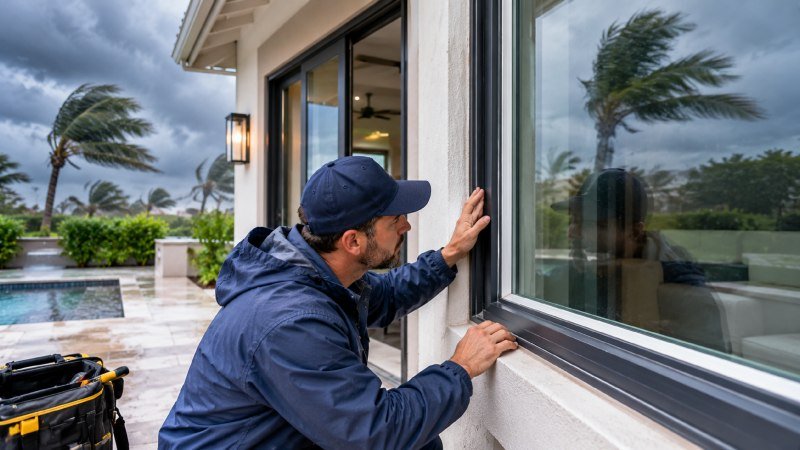
When severe weather warnings light up your phone, the instinct is to stock up on water, find flashlights, and secure patio furniture. Yet when gale-force winds and torrential rains hit, your home’s survival depends on the structural integrity of your building envelope—specifically, your windows and doors.
Exterior openings represent the most vulnerable points of any home. While walls and roof trusses distribute massive loads, a single fractured window or blown-in entry door can compromise the entire structure within seconds.
Many homeowners assume that if their windows handled last season’s storms, they are ready for severe tropical systems or nor’easters. Unfortunately, minor drafts, worn weatherstripping, and degraded framing can turn into catastrophic failures under intense atmospheric pressure. Here is how to evaluate whether your windows and doors are ready for extreme weather—and how to reinforce your defenses before storm season arrives.
1. The Physics of Severe Weather: Why Building Envelopes Fail
The quick answer: When storm winds shatter a window or breach an entry door, air rushes inside and creates sudden internal pressurization, which combines with external suction to lift roofs off structures.
Severe weather damage is rarely caused solely by brute wind force pushing against exterior walls. Instead, it occurs through dynamic pressure differentials. As high winds flow over and around a home, they create negative suction pressure on the roof and leeward walls, much like air flowing over an airplane wing.
If flying debris punctures a standard window, high-velocity air floods the home, instantly spiking internal pressure. This internal push, combined with external roof suction, creates an upward force capable of tearing roof trusses away from wall plates. Once the roof lifts, structural walls collapse inward. Protecting every glazed opening and entry door is the single most vital step in preserving the entire building.
2. The Dangerous Myth of Window Tape and Standard Glass
The quick answer: Taping windows does not prevent glass from breaking; it creates larger, heavier shards that turn into dangerous projectiles during high-wind events.
One of the most persistent myths in storm prep is placing tape across glass panes. The National Hurricane Center and safety organizations have warned against this practice for decades. Tape does not increase the structural strength of glass against wind pressure or flying debris.
Worse, taped glass that fails shatters into large, dagger-like shards held together in heavy sheets rather than small fragments. These massive shards can slice through drywall and cause severe personal injury.
Standard annealed or tempered glass is simply not engineered to stop wind-borne missiles. If your home relies on conventional single- or double-pane windows without certified impact ratings or code-approved shutters, your openings remain vulnerable during severe weather.
3. The Homeowner’s Severe Storm Window Inspection Checklist
The quick answer: Inspecting glass, frames, caulking, and locking hardware twice a year identifies vulnerabilities like wood rot, frame deflection, and compromised seals before storm season arrives.
Conducting a severe storm window inspection takes under an hour and reveals whether your openings need maintenance or upgrades:
- Inspect Caulk and Sealants: Check where window frames meet siding, stucco, or brick. Brittle or missing caulk allows wind-driven rain into wall cavities.
- Examine Weep Holes: Look along the bottom track of sliding and hung windows. Weep holes must be clear of dirt so rain drains outward rather than onto interior sills.
- Check for Frame Deflection and Rot: Press along wooden sills to check for soft spots. On vinyl and aluminum units, look for frame bowing that prevents a flush seal.
- Test Locking Mechanisms: A storm-ready window must lock tightly to compress weatherstripping. Loose latches or misalignment indicate sagging frames.
4. Reinforcing Your Largest Opening: Patio and Sliding Doors
The quick answer: Large glass patio sliders experience tremendous wind load forces, requiring heavy-duty impact-rated glass, reinforced aluminum tracks, and multi-point locking systems to prevent blow-outs.
While standard windows present a moderate surface area, an eight-foot or twelve-foot expanse of sliding patio doors bears thousands of pounds of cyclical pressure during a storm. If sliding doors lack adequate design pressure ratings or secure anchoring, wind forces can bow frames right out of their tracks.
Homeowners in vulnerable coastal regions often prioritize replacing aged patio doors with engineered assemblies. Installing certified hurricane impact glass doors in Davie, FL provides round-the-clock passive storm defense. Impact-rated doors combine heavy-gauge aluminum framing with laminated glass containing a shatter-resistant polyvinyl butyral (PVB) or SentryGlas interlayer. Even if flying debris cracks the exterior pane, the durable interlayer remains bonded and intact, preserving the building envelope and keeping wind and water outside.
5. Decoding Design Pressure (DP) Ratings and Impact Certifications
The quick answer: Design Pressure (DP) ratings measure a window’s structural ability to withstand positive wind push, negative suction pull, and water infiltration without failing.
When evaluating replacement windows or shutters, look beyond brand names to certified performance labels. In storm-prone regions, building codes enforce strict requirements based on localized wind zones:
- Design Pressure (DP) Rating: Represents the pounds per square foot (PSF) of wind pressure a window can withstand. A DP rating of 50 means the unit held 75 PSF in testing (using a 1.5 safety factor). Coastal properties typically require higher DP ratings (DP 50 to DP 70+) than inland homes.
- Large Missile Impact Testing: Certified impact products must withstand a direct hit from a nine-pound 2×4 lumber projectile fired at 50 feet per second, followed by 9,000 cycles of positive and negative wind pressure.
Checking your home’s design pressure ratings for windows ensures openings meet local codes and qualify you for valuable insurance discounts.
6. Shutters vs. Impact Windows: Choosing the Right Protection Strategy
The quick answer: Impact glass provides continuous passive protection and noise reduction with zero setup time, while certified storm shutters offer an effective, lower-cost defense that requires manual deployment.
If your home features standard windows, you face a choice between installing impact-resistant glass or adding storm shutters:
- Impact-Resistant Glass: Offers passive, 24/7 protection with zero setup time before a storm. It allows natural daylight during power outages, enhances daily security, and dampens outside street noise.
- Exterior Shutters (Accordion, Roll-Down, or Bahama): Provide dependable protection at a lower upfront cost than full window replacement, but require manual deployment and periodic mechanical maintenance.
Following consistent hurricane shutter maintenance tips—such as clearing tracks, testing locking pins, and lubricating rollers annually—ensures shutters deploy smoothly when a storm approaches.
A home is only as strong as its most vulnerable opening. When extreme weather strikes, standard glass, aged caulking, and loose latches quickly fail under relentless pressure. By inspecting frames for wear, understanding performance ratings, and investing in certified impact protection for vulnerable openings, you safeguard your family and protect your investment. Reinforcing your home’s exterior envelope ensures that when severe weather approaches, your living space remains secure, dry, and intact.