
The Problem
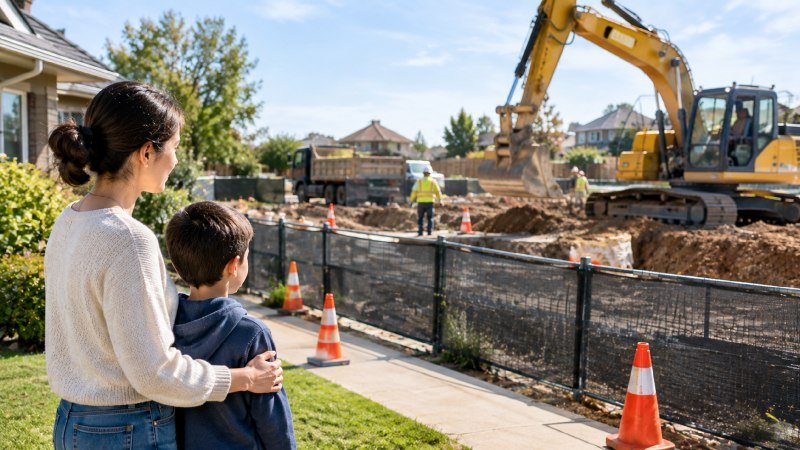
Construction activity near residential neighborhoods creates real risks that homeowners often underestimate until an incident occurs. Heavy equipment, exposed trenches, and unsecured materials can turn a quiet street into a hazard zone within days. Families living adjacent to active job sites frequently report dust, noise, and unexpected foot traffic from workers moving between properties. These conditions are not simply inconvenient; they can lead to falls, vehicle collisions, and exposure to airborne particulates that affect long-term health. In many cases, warning signs go unnoticed until a neighbor is injured or a vehicle is damaged by falling debris.
Local governments often lack the staffing to inspect every site as frequently as safety codes require. Contractors operating on tight deadlines sometimes bypass proper fencing, signage, or debris containment to save time. When enforcement is inconsistent, the burden shifts to residents to notice hazards and report them before someone gets hurt. Insurance adjusters and code officials cannot be everywhere at once, which means many hazards simply go unreported for weeks at a time. Children playing nearby, pets escaping through gaps in fencing, and elderly neighbors walking past open excavations all face elevated risk that most people never consider until it becomes personal.
The Approach
Addressing these risks starts with documentation rather than confrontation. Homeowners who notice unsafe conditions should photograph the site, note dates and times, and keep records of any communication with the contractor or property owner. When violations persist or result in injury, families sometimes need professional support to understand whether local and federal codes were actually broken. In legal disputes involving injury or property damage, testimony from an expert witness construction safety violations specialist can clarify whether a contractor’s practices fell below accepted industry standards. Insurance carriers and attorneys often rely on this kind of outside assessment before deciding how to proceed with a claim.
This kind of review typically examines fencing requirements, equipment storage, signage placement, and worker supervision protocols. A qualified reviewer compares what actually happened on site against OSHA guidelines and local building codes, then explains the gap in terms a judge, jury, or insurance adjuster can understand. That process often reveals patterns of neglect that were not obvious to residents living nearby. This kind of clarity can shorten disputes considerably, since both sides are working from the same factual foundation rather than competing assumptions. It also gives families a clearer picture of whether their concerns were valid all along, rather than leaving them to guess.
What to Look For
Residents living near active construction can watch for a handful of warning signs without needing technical training. Fencing that leans, gaps large enough for a child or pet to slip through, and missing warning signage near excavation edges are all red flags. Equipment left running unattended, materials stacked without stabilization, and workers operating without visible protective gear suggest a site that is cutting corners on basic precautions. Trucks entering and exiting the site without spotters, or workers standing beneath suspended loads, are additional signs that safety protocols are being ignored. Noise and dust are expected on any job site, but consistent disregard for containment measures points to a larger pattern of carelessness.
Health considerations matter as much as physical hazards, particularly for households with young children, older adults, or anyone with respiratory conditions. The CDC health and wellness resources offer guidance on how airborne construction particulates, prolonged noise exposure, and disrupted sleep patterns can affect community health over time, and comparing that guidance against what a nearby site is actually doing can help residents decide when a complaint is warranted. Reaching out to a local building department with specific observations, rather than vague complaints, tends to produce faster action from site supervisors. Staying attentive to these details early, rather than waiting for an injury, gives families the best chance of resolving problems before they escalate into something far more serious for everyone involved.