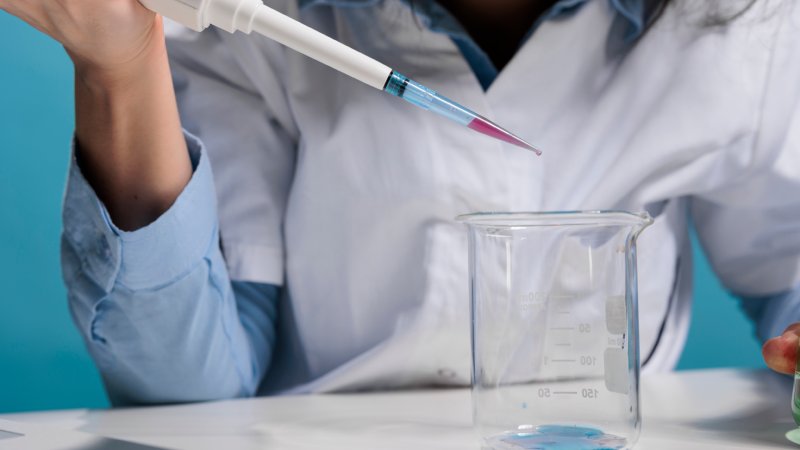
Peptides are a major topic in the research, wellness, fitness, and performance spaces right now. From compounds studied for recovery and metabolism to those explored for cellular health, peptides have become a serious point of interest for people who want to understand how these molecules are prepared, stored, and handled.
But there is one supporting product that often gets overlooked: bacwater, short for bacteriostatic water.
While peptides usually get the spotlight, bacwater plays an important role in how many lyophilized peptides are reconstituted before use in research settings. It is not flashy. It is not trendy. But it is essential to understand if you are learning how peptide products are typically prepared.
So, what exactly is bacwater? How does it work with peptides? And why is it used so often?
Let’s break it down.
What Is Bacwater?
Bacwater, or bacteriostatic water, is sterile water that contains a small amount of benzyl alcohol, usually around 0.9%. That benzyl alcohol is the key difference between bacteriostatic water and plain sterile water.
The word “bacteriostatic” means it helps inhibit the growth of bacteria. It does not mean the water kills all bacteria instantly. Instead, it helps slow or prevent bacterial growth after the vial has been accessed.
That matters because many peptide products come in a dry, freeze-dried powder form known as lyophilized powder. Before the peptide can be used in a liquid format for research, it typically needs to be mixed with a compatible liquid. This process is called reconstitution.
That is where bacwater comes in.
Why Peptides Often Come as a Powder
Many peptides are not shipped or stored as a liquid because liquid formulas can be less stable over time. To improve shelf life and protect the integrity of the compound, peptide manufacturers often use lyophilization.
Lyophilization is basically a freeze-drying process. It removes moisture while helping preserve the peptide’s structure. The result is a small puck, cake, or powder at the bottom of the vial.
This dry format is useful for storage, but it is not ready as a liquid until it is reconstituted.
Bacwater acts as the solution that brings the peptide powder back into liquid form.
How Bacwater Works During Peptide Reconstitution
When bacwater is added to a vial containing a lyophilized peptide, it dissolves the peptide powder and turns it into a usable liquid solution for research purposes.
The goal is not to “activate” the peptide in a dramatic sense. The peptide is already the active compound. Bacwater simply provides the sterile liquid environment needed to dissolve and suspend the peptide evenly.
Once reconstituted, the peptide solution can be measured more accurately because the compound is distributed in a liquid volume. This is why the amount of bacwater added matters in research preparation: it affects the concentration of the final solution.
In simple terms:
More bacwater = more diluted solution.
Less bacwater = more concentrated solution.
The peptide amount stays the same. The liquid volume changes the concentration.
Why Bacwater Is Commonly Preferred Over Sterile Water
Sterile water can also be used in some laboratory contexts, but bacwater is commonly preferred when a vial may be accessed more than once.
That is because bacteriostatic water contains benzyl alcohol, which helps inhibit bacterial growth after the first puncture of the vial. Sterile water does not contain this preservative.
This makes bacwater better suited for multi-use research handling, while plain sterile water is generally more limited once opened or accessed.
The benzyl alcohol does not make bacwater invincible. Proper storage, clean handling, and expiration awareness still matter. But it does provide an added layer of microbial control compared to plain sterile water.
Bacwater Helps With Measurement Consistency
One major reason bacwater matters is consistency.
Peptides are often tiny compounds measured in milligrams. Without reconstitution, it would be extremely difficult to measure small portions of a dry powder accurately. Once mixed into a known amount of bacwater, the peptide becomes easier to work with in a controlled, repeatable way.
For example, if a vial contains a known amount of peptide and a specific amount of bacwater is added, the concentration can be calculated. That concentration then informs how much peptide exists in each measured volume of liquid.
This is especially important in research environments where accuracy, repeatability, and documentation matter.
Bacwater Can Affect Peptide Handling and Storage
Once a peptide is reconstituted, storage becomes more important. Many peptides are more sensitive in liquid form than they are as a dry powder. Temperature, light exposure, contamination risk, and time can all influence quality.
Bacwater helps make the peptide usable in liquid form, but it does not eliminate the need for careful storage. Reconstituted peptides are commonly stored refrigerated, away from heat and direct light, depending on the specific peptide and supplier recommendations.
The takeaway is simple: bacwater helps with preparation, but proper handling protects the integrity of the solution afterward.
What Bacwater Does Not Do
There is a lot of confusion online about bacwater, so it is worth clearing up what it does not do.
Bacwater does not make a low-quality peptide high-quality. Does not fix contamination. It does not guarantee long-term stability. It does not replace proper sterile technique. And it does not change the identity of the peptide itself.
It is a reconstitution solution. Its job is to dissolve the peptide and help maintain a bacteriostatic environment after the vial has been accessed.
That is important, but it is not magic.
Why Quality Matters
When discussing peptides and bacwater, quality control is everything.
A peptide can only perform as expected in a research setting if the product is accurately labeled, properly manufactured, and handled correctly. The same logic applies to bacwater. It should be sterile, properly sealed, and sourced from a reputable supplier.
Poor-quality inputs create poor-quality outcomes. That is true whether you are talking about the peptide itself, the reconstitution solution, or the storage process.
For anyone evaluating peptide products, the smarter move is to look for transparency, clear labeling, professional packaging, and a supplier that takes product integrity seriously.
The Bottom Line
Bacwater plays a practical but important role in peptide preparation. It helps convert lyophilized peptide powder into a measurable liquid solution while adding bacteriostatic properties through benzyl alcohol.
In plain English, bacwater helps make peptide research preparation cleaner, more consistent, and easier to manage.
It does not replace quality sourcing. It does not override proper handling. And it does not make every peptide solution stable forever. But when used appropriately in research contexts, bacteriostatic water is one of the most common and useful tools for peptide reconstitution.
Peptides may get all the attention, but bacwater is part of the infrastructure that makes accurate peptide handling possible.