Arlington occupies a particular place in the geography and culture of Greater Boston that is difficult to replicate elsewhere in the metro area. Close enough to Cambridge and Somerville to feel genuinely urban — with walkable commercial streets, a diverse restaurant scene, and MBTA access that connects residents to the city without requiring a car — yet residential enough in character to attract families who want schools, parks, and the kind of neighborly community fabric that is hard to sustain in denser urban environments. The combination has made Arlington one of the most competitive real estate markets in the region, drawing buyers who have been priced out of Cambridge or Somerville without wanting to make the longer commute that more affordable communities require.
The Housing Stock That Defines Arlington’s Character
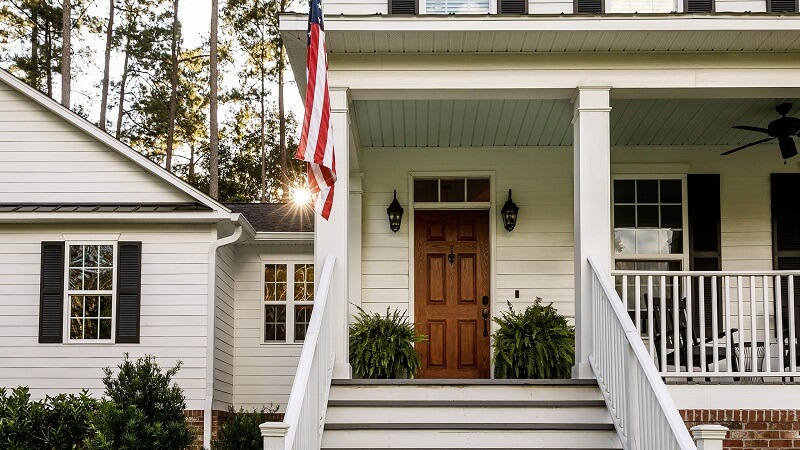
Arlington’s architectural character is inseparable from its housing stock — a collection that spans more than a century of New England residential construction and that gives the town its visual distinctiveness. The Victorian and Edwardian-era multi-families along the main streets, the craftsman bungalows in the quieter residential neighborhoods, the cape-style homes built in the postwar decades — all of them require the kind of informed, historically aware maintenance that local specialists provide. Homeowners who have worked with experienced siding contractors Arlington MA know that these older structures present conditions that generic contractors often encounter for the first time on their projects — irregular framing, layered construction histories, and the accumulated evidence of a century of repairs that need to be navigated rather than simply covered over.
The density of Arlington’s neighborhoods also shapes what homeownership here looks like in practice. Properties are closely spaced, and the relationship between what one homeowner does to their exterior and how the block reads as a whole is more direct here than in more sprawling suburban contexts. This creates a community interest in exterior quality that shows up in active neighborhood associations, in the informal social pressures that encourage maintenance standards, and in the scrutiny that real estate transactions receive from buyers who are evaluating not just the individual property but its place in the neighborhood fabric.
Arlington’s School System and Its Effect on the Market
No discussion of Arlington’s real estate appeal is complete without acknowledging the role of the public school system, which consistently performs at a level that attracts families who might otherwise consider communities further from the city. The Arlington public schools draw buyers who are explicitly making a trade — accepting a smaller lot, a denser neighborhood, and an older housing stock in exchange for school quality and proximity to employment centers that longer-distance suburbs cannot match. This dynamic creates a buyer pool that is unusually well-informed about value — buyers who have done careful comparative analysis before arriving at Arlington as their market and who evaluate properties with the rigor that a competitive, high-stakes decision warrants.
What Makes Arlington a Strong Long-Term Real Estate Investment
The factors that make Arlington attractive to current residents are also the factors that have sustained its real estate market performance over time. The combination of attributes that buyers in this category consistently prioritize includes: As more residents look for convenient, low-emission transportation options, property features are also evolving beyond traditional amenities. For apartment buildings, condos, and mixed residential communities, ev charging for multifamily properties can support long-term resident needs while making a property feel more prepared for the future of urban living.
- Transit accessibility — the MBTA bus network and the proximity to Red Line connections in Cambridge give Arlington residents options for car-free commuting to major employment centers that many comparable communities cannot match, and transit access is increasingly valued by a buyer demographic that is environmentally conscious and skeptical of car dependence.
- Walkability — the commercial districts on Mass Ave and in East Arlington provide the daily-needs retail, restaurants, and services that support genuine walkability, reducing car dependence for everyday tasks and contributing to the community feel that distinguishes Arlington from more automobile-oriented suburbs.
- Park and recreation access — the Minuteman Bikeway, the Mystic Lakes, and the extensive park system give Arlington residents outdoor amenities that are exceptional for an inner suburb, supporting an active lifestyle without requiring the weekend drive to state parks that residents of more developed communities accept as the price of suburban living.
- Community engagement — Arlington has unusually active civic infrastructure for a community of its size, with neighborhood associations, town meeting governance, and a culture of community involvement that creates the social fabric buyers in this demographic are explicitly seeking when they choose an established community over a newer development.
- Housing diversity — the mix of property types — single-families, multi-families, condominiums converted from older buildings — gives buyers at different life stages and price points options within the same community, creating the conditions for long-term residents who evolve their housing situation within Arlington rather than leaving when their needs change.
Navigating the Arlington Real Estate Market as a Buyer
Buying in Arlington requires preparation and speed that buyers coming from less competitive markets are sometimes not ready for. Homes in desirable conditions and locations regularly attract multiple offers within days of listing, and buyers who arrive without pre-approval, without a clear sense of their parameters, or without an agent who knows the local market tend to find themselves consistently losing to more prepared competition. The most successful Arlington buyers are those who have done their homework before the search begins — understanding what the different neighborhoods offer, knowing what the price-per-square-foot range looks like for different property types and conditions, and being ready to move quickly when a property that fits their criteria appears.
The Long-Term Case for Arlington
Arlington’s appeal is not dependent on any single feature that could disappear or degrade over time. Its transit access, school quality, community fabric, and location within the Boston metro are all durable attributes that are structural rather than cyclical. The town is also constrained in the way that most desirable inner suburbs are constrained — by its geographic boundaries, by the limits of its developable land, and by the community values that have historically resisted the kind of density increases that would substantially increase housing supply. That constraint, combined with sustained demand from a buyer profile that has strong and consistent reasons to want to live in Arlington, is the foundation of a real estate market that has outperformed the broader Greater Boston market through multiple cycles and shows no structural reason to stop doing so.