
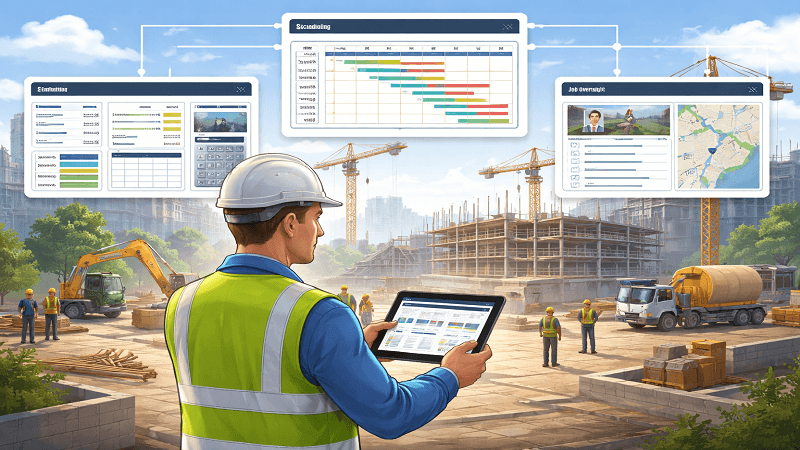
Construction businesses often lose a lot of time when they do things like estimating, scheduling, and project supervision with different systems. A bid can be made in one spreadsheet, while labor planning can be in another. Field updates might come by calls or messages that are hard to follow up on later.
When the number of projects goes up, this way of working causes delays, repeats work, and makes it hard to see all the costs. Using one platform for all parts of a project helps contractors move from planning to finishing the work with fewer problems and better management.
Unified Cost Planning Improves Early Project Decisions
It is easier to plan costs when all the data is stored together in one place. A building cost estimator helps contractors get started with putting down values for labor, supplies, and overhead costs before the real work starts. If you build this estimate inside the same platform where you pay attention to schedules and keep up with jobs, every next step on the project stays linked to your first cost ideas.
The contractor construction cost resource helps with this process. It gives clear pricing guides. People can use these to check costs in many types of building jobs and sizes of projects. Contractors do not have to put numbers into other files on their own. They can keep the same cost plan from start to finish.
Modern platforms also provide access to real-time construction cost data, allowing contractors to work with accurate, location-based pricing for both labor and materials. Instead of relying on static estimates, teams can use a centralized construction cost resource to reference current market rates and adjust budgets instantly. This ensures that every estimate reflects realistic costs, improves bid accuracy, and reduces the risk of unexpected budget overruns as the project progresses.
When estimating and scheduling work together, it is much easier to see changes in cost. If a client wants to change something, like upgrade what will be used or adjust the plan, contractors can quickly see how that will affect how long the job takes, what they need to buy, and when things will be done. This helps cut down on the time between changing prices and getting a project approved.
Scheduling Becomes More Accurate When Linked to Approved Estimates
Project schedules work best when they use real cost and work hour details, not just rough guesses at the time. A single platform lets contractors tie the hours they expect to spend to each job step. This helps spread work more evenly for every phase of the project.
For example, if framing needs more labor because the size of the area has changed, this will cause other jobs, like electrical work or finishing, to change too. This amount of connection helps keep schedules accurate and up to date with what the site needs.
It also helps contractors know if delays are caused by late delivery of goods, not enough workers, or mistakes in planning. This way, they can make changes early on, before bigger problems happen.
Job Oversight Gains More Consistency Across Teams
Field supervision gets better when the office team and the site team use the same system. You can keep daily progress, the steps you finish, things you still need to approve, and how much material you use all in one spot. This means things do not get lost across many ways of talking to each other.
This kind of visibility lets project managers see changes right away when work slows down. They do not have to wait until the end of the day for a summary. They can look at updates as they come in and make choices based on what is happening on the site now.
Centralized oversight makes it easier to keep good records. This is important when the team needs to handle inspections. It helps when you work with subcontractors or look over bills too.
One Platform Strengthens Long-Term Business Performance
The main good thing about having one workflow shows up as time goes by. Each finished project gives useful data that helps for the next time you make plans or look at how long work will take and how to set up your team and tools.
A building cost estimator is even more useful when contractors can see their estimates and what really happened for a project on the same platform. This feedback can help them price jobs better, feel more sure when bidding next time, and be better with their profit margins as the business gets bigger.