
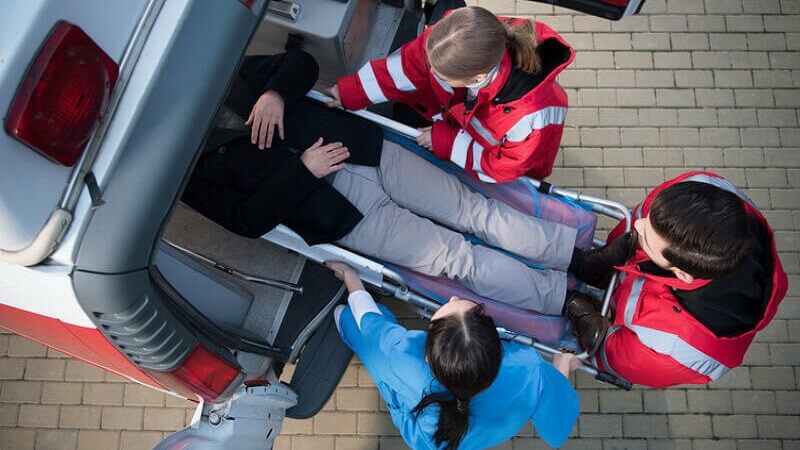
When most people picture an ambulance call, they think about the flashing lights, the siren, the paramedics, and the rapid trip to the hospital. The piece of equipment in the middle of all of it usually does not get a second thought, even though it is the thing that actually carries a sick or injured person from their home, the side of a road, or a public space into a position where medical care can be delivered. That piece of equipment is the ambulance stretcher, and modern stretchers have become surprisingly sophisticated over the past decade. For families who have ever called an ambulance for a parent, a child, or a partner, understanding a little about how the equipment works can take some of the unknown out of an already stressful moment.
Older ambulance stretchers were mechanical and required two paramedics to physically lift and lower the patient with leg strength. Newer models, including the widely used Stryker Power-PRO series, are battery powered. A small motor handles the raising and lowering motion, which reduces the strain on the responder’s back and reduces the risk of dropping a patient during transfer. Specialist suppliers such as Stretchers R Us provide a range of Ambulance Stretchers, including new and refurbished Stryker Power-PRO models, which are common in fleets across emergency medical services in North America. For an EMS service, having reliable, well-maintained stretchers is one of the unglamorous but essential parts of being able to respond consistently.
For families, the practical things worth knowing are simple. A modern stretcher can typically support a patient of more than 500 pounds, though weight capacity does vary by model. It can be lowered close to the floor so a patient does not need to climb on, which matters when someone has fallen or is in pain. It has straps to keep the patient secure during transfer through doorways, down steps, and into the ambulance. Once inside the ambulance, the stretcher locks into the floor so the patient stays safe during the drive. None of these details change the outcome of a medical event, but they do explain what the family is watching happen and help reduce the panic that often comes with the unknown.
There are moments when an ambulance is clearly needed, such as chest pain, difficulty breathing, signs of stroke, severe bleeding, or loss of consciousness. There are other moments when families hesitate because they are unsure. The general rule is that if there is any doubt about the safety of moving someone in a private car, an ambulance is the right call. EMS crews are trained to handle the transfer using equipment designed for the job, including the stretcher that will quietly do most of the lifting.
The takeaway for everyday life is that this is one of those silent pieces of infrastructure that everyone benefits from and almost no one thinks about. The crew is trained, the rig is stocked, and the stretcher is ready. Knowing a little about how the equipment works will not change a medical emergency, but it can make the experience of being in one slightly less frightening.
Frequently Asked Questions
What is a power stretcher? A power stretcher is a battery-powered ambulance cot that raises and lowers patients using a motor, reducing the physical strain on paramedics and reducing the risk of drops during transfer.
How much weight can an ambulance stretcher hold? Many modern stretchers, including the Stryker Power-PRO series, support patients weighing more than 500 pounds, with specific capacity varying by model.
Do EMS services use new or refurbished stretchers? Both. New stretchers are common in larger services, while smaller and rural services often buy reliable refurbished units from established suppliers to manage capital costs.
Is it safe to be transferred onto an ambulance stretcher? Yes. The stretcher lowers close to the floor for ease of transfer, has straps to secure the patient, and locks into the floor of the ambulance during the drive.
When should a family call an ambulance instead of driving to the hospital? Any time there is concern about safely moving the patient, signs of a heart attack, stroke, severe injury, or difficulty breathing, an ambulance is the safer choice because crews are trained and equipped for the transfer.