
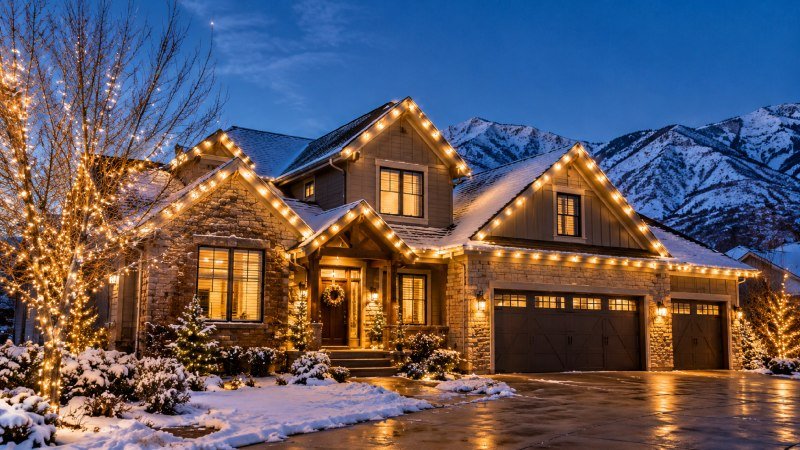
The Annual Ladder Ritual Has Lost Its Charm
Holiday decorating used to mean a weekend spent untangling strands from last year, testing bulbs one by one, and climbing onto icy rooflines before the first snowfall hit Utah Valley. That pattern has shifted quietly over the past several years as more homeowners in Provo and surrounding neighborhoods look for ways to enjoy festive lighting without repeating the same labor-intensive setup every November.
The physical demands of the job haven’t changed, even if attitudes toward it have. Rooflines in Provo often include steep pitches, tall gables, and awkward eaves that make ladder work genuinely risky, especially once temperatures drop and surfaces ice over. Emergency room visits tied to holiday decorating injuries spike every year around this time, and falls from ladders remain one of the most common causes. For many families, the calculus has simply stopped making sense: a few weeks of lights isn’t worth a sprained wrist or worse.
There’s also the matter of time. Between work schedules, kids’ activities, and the general crunch of late autumn, finding a free Saturday to hang lights has become harder to justify. Homeowners increasingly want the visual payoff of a well-lit house without the logistical burden that used to come with it.
Fixed Lighting Systems Are Changing the Equation
The response to this fatigue has been a move toward lighting systems installed once and used for years, rather than assembled and disassembled annually. These setups involve commercial-grade fixtures mounted along rooflines, trim, and architectural features, wired to be weatherproof and nearly invisible when not illuminated. Instead of a visible strand of bulbs clipped awkwardly to gutters, the lighting sits flush against the home’s lines, giving it a cleaner look even when it’s off.
Companies offering permanent lighting installation in Provo have built their services around this exact shift in homeowner expectations. permanent lighting installation in Provo typically includes not just the physical hardware but also app-based controls that let homeowners switch between holiday colors, everyday warm white, or custom patterns for birthdays and game days. The appeal isn’t limited to convenience during December; it extends to year-round use, which changes how people think about the investment entirely.
Energy use is part of that conversation too. Many of these systems rely on LED fixtures, which draw significantly less power than older incandescent strands and last considerably longer under continuous outdoor exposure. The Department of Energy has published consumer guidance on how lighting choices affect household energy costs, and the Department of Energy lighting resources page makes a clear case for why LED conversion pays off over time, particularly for lighting that runs for extended hours across multiple seasons rather than just a few weeks in December.
What to Ask Before Committing to a Permanent Setup
Not every installation is built the same way, and homeowners considering this upgrade should look closely at the materials and warranty terms before signing a contract. Fixtures exposed to Utah’s temperature swings, from summer heat to winter freeze-thaw cycles, need housings rated for that kind of stress. Cheaper components can fade, crack, or fail within a couple of seasons, which defeats the purpose of installing something meant to last a decade or more.
Installation quality matters just as much as the product itself. Mounting hardware needs to be secured in a way that doesn’t damage roofing material or create gaps where water can seep in, and wiring should be routed so it’s protected from rodents and weather. Ask any prospective installer how they handle roof penetrations, whether they offer a workmanship warranty separate from the manufacturer’s product warranty, and how accessible the system is for future repairs or color pattern updates.
It’s also worth considering how a system integrates with existing smart home setups, since many homeowners now want lighting schedules tied to sunset times or linked with voice assistants. A company that understands both the electrical and software sides of these installations will typically walk through those options during an initial consultation rather than leaving homeowners to figure it out after the fact.
Price comparisons should account for the full lifespan of the system, not just the upfront installation cost. A higher initial quote that includes better fixtures, a longer warranty, and professional-grade wiring often ends up cheaper over five or six years than repeatedly buying and replacing seasonal strands. Thinking in terms of total cost rather than sticker price tends to produce better decisions, and it’s a habit worth applying to most home improvement projects, not just exterior lighting.