
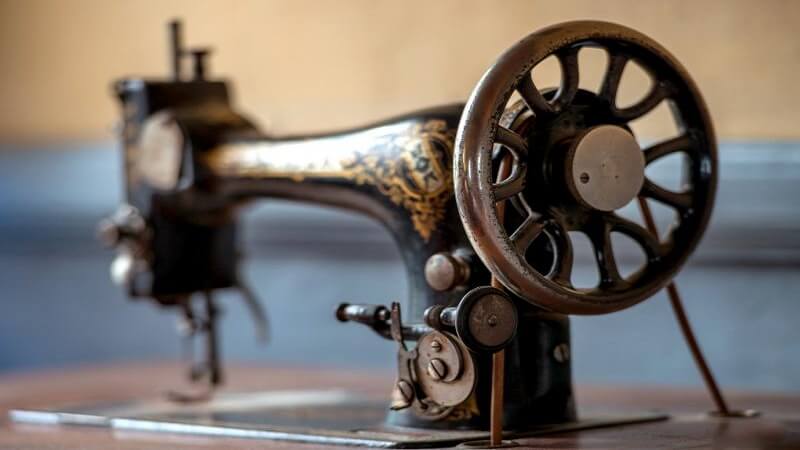
Almost every family has one. A heavy, beautiful, slightly intimidating old Singer sewing machine sitting in an attic, a basement, a hallway closet, or in the corner of a grandmother’s house. They are passed down through generations because nobody quite has the heart to throw them away, but they are rarely used because the bobbin is in the wrong place, the foot pedal feels strange, and modern thread spools do not match up with the spool pin. For busy moms juggling work, family, and a long to-do list, the idea of getting one of these old machines running again can feel like just another project that will not happen. The honest truth is that it is one of the most rewarding small projects a family can take on, and the savings over buying a new machine are real.
Old Singer machines were built in an era when sewing was an essential household skill, and the company built them to last decades. Many of the most common vintage models are still mechanically sound after 60, 70, or even 100 years. The reason they often sit unused is rarely a serious mechanical fault. It is usually a simple issue such as a dried out lubrication, a worn belt, a missing bobbin case, a torn power cord, or a small broken plastic part. Replacing any of these is straightforward if the right part can be sourced.
This is where specialist suppliers come in. Sites such as Vintage Singer Parts focus exclusively on parts for older Singer machines, which means they carry the specific components that big-box retailers and modern dealers no longer stock. A bobbin case for a 1950s Featherweight, a motor for a 201 from the 1940s, a foot pedal for a 99K, a needle plate for a 15-91. These are the kinds of items a generalist sewing shop will not have on the shelf but that bring a beloved machine back to life. For moms thinking about teaching a child to sew, repairing a curtain hem, or simply enjoying a quiet hobby, having a working machine in the house makes all the difference.
Getting started is easier than people expect. Identify the model number, which is usually stamped onto the body of the machine. Clean the machine carefully with a soft brush and a small amount of sewing machine oil where the manual indicates. Replace the needle, even if the old one looks fine, because needles are inexpensive and an old one is almost always part of the problem. Wind a new bobbin with quality thread and test the machine on a piece of cotton scrap. If something specific is broken or missing, look for the part by model number from a vintage-specialist supplier and follow the instructions for replacement.
The reward is more than a working machine. Sewing is a quiet, focused activity that fits neatly into the small windows of time many moms have during the day. Mending instead of replacing, making simple curtains, sewing custom Halloween costumes, or hemming jeans all become possible. Children who see the process learn a useful life skill. And the family heirloom that has been sitting in the closet becomes a tool that earns its place in the house again.
Frequently Asked Questions
Are vintage Singer sewing machines still useful today? Yes. Many vintage Singers were built with all-metal parts and are mechanically sound after decades. With basic maintenance and the right replacement parts, they sew strong, straight stitches that rival many modern machines.
Where do I find my Singer model number? The model number is usually stamped on the front, the back, or the underside of the machine. Online identification guides can help match the number to the production year and the parts that fit.
What are the most common parts that need replacing? Bobbins and bobbin cases, needles, belts, power cords, motor brushes, and occasionally foot pedals. Most of these are inexpensive and easy to install at home.
Can a vintage Singer be used by a beginner? Yes. Many of the older mechanical models are actually easier to learn on because the mechanics are visible and straightforward, and they handle a wide range of fabric weights without complaining.
Where can I buy parts for a vintage Singer? Specialist suppliers that focus on older Singer machines carry parts by model number, which is usually easier than searching at a general sewing shop.